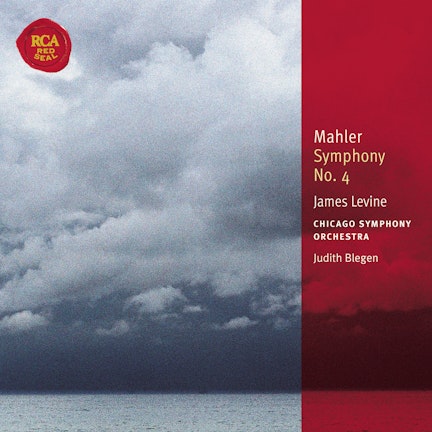
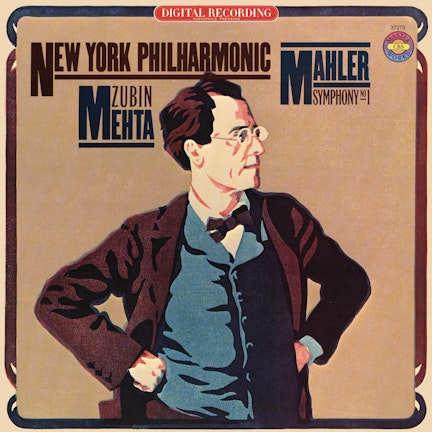
Josef Krips, the conductor on this album, was barred from official posts after Hitler's 1938 annexation of Austria due to his father's Jewish birth, and spent World War II secretly coaching singers.
Performer Biography
Suzanne Danco, the soprano on this recording, was admired for her impeccable style in Mozart and the French repertoire, and her vocal allure was described by composer Luigi Dallapiccola as 'all spun air'.
Compositional Technique
Mahler used a Haydnesque orchestra for his Fourth Symphony, without trombones or tuba, but included percussion elements from Haydn's 'Military' Symphony, resulting in a unique sunlit transparency.
Composition History
Mahler's Fourth Symphony was an exercise in "time travel" as its first three movements, written between 1899 and 1901, had to backfit his 1892 song "Das himmlische Leben" ("Life in Heaven"), which serves as its finale.
Interpretation
Conductor Josef Krips, with his strong affinity for Haydn and classical structures, never rushes the music or indulges in unnecessary point-making, adhering to Mahler's repeated 'nicht eilen' ('don't rush') markings.
Composer's Artistic Vision
Mahler's Fourth Symphony needed to summarize a colossal symphonic trilogy (his Second and Third symphonies) and recapture youthful 'intimations of immortality' without topping the massive sound of its predecessors.
Compositional Technique
In the Scherzo of Mahler's Fourth Symphony, titled 'Freund Hein spielt auf' ('Death strikes up'), the solo violinist is required to tune their instrument up a tone to evoke a skeletal fiddler.