Despite its complexities, Mahler's Fifth Symphony was recognized for its unity by critics, with one in 1907 noting its "thematic uniformity and a characteristic style."
Performer Biography
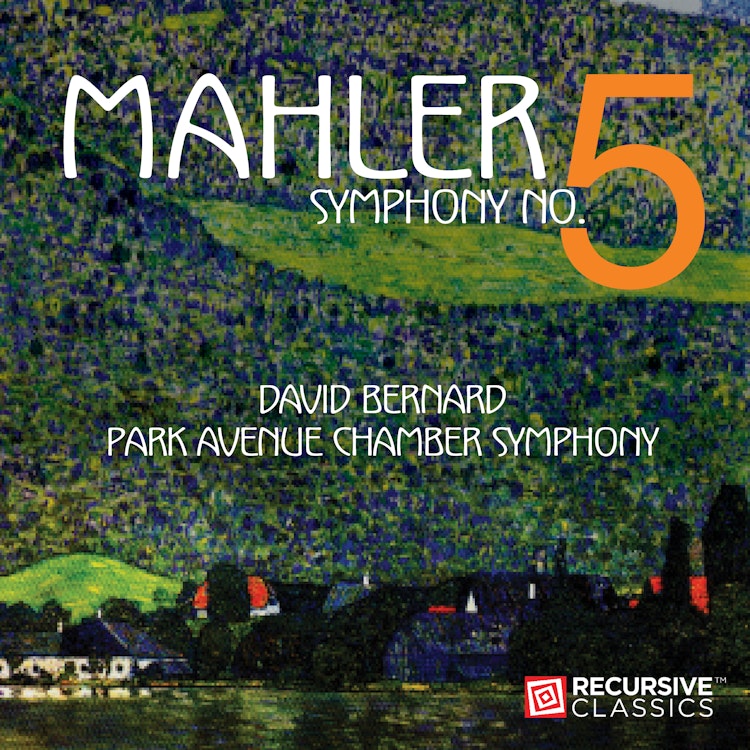
David Bernard, the conductor on this album, is the First Prize winner of The American Prize Orchestral Conducting Competition (professional division) 2019.
Compositional Technique
Mahler continuously revised the orchestration of his Fifth Symphony throughout his life, thinning textures and reassigning parts to improve transparency and voice leading, despite using a large orchestra.
Composition History
Gustav Mahler's Symphony No. 5, composed between 1901 and 1902, was the first of his symphonies to have no stated references to extramusical ideas, programs, or verbal texts.
Composer's Artistic Vision
Mahler's Fifth Symphony marks a shift in his symphonic style, focusing on contrapuntal transparency influenced by his obsession with Bach, whom he considered the greatest polyphonist.
Compositional Technique
The Fifth Symphony's structure includes five instrumental movements grouped into three larger parts, with the first movement being a funeral march and the second postponing the typical sonata allegro form.
Composer's Artistic Vision
Mahler's interest in science, particularly physics and cosmology, influenced his new compositional style for the Fifth Symphony, which he described using scientific terminology.
You might also enjoy...
Nielsen: Symphony No. 4, Op. 29 "The Inextinguishable"