Mahler's wife, Alma, recounted that after the final rehearsal for the Sixth Symphony's premiere, Mahler was sobbing and wringing his hands, unable to control himself.
Composition History
Mahler composed his Sixth Symphony in the summers of 1903 and 1904 at Maiernigg on the Wörthersee in Carinthia, a period that was outwardly happy for him and his wife, Alma.
Compositional Technique
The Sixth Symphony is one of Mahler's 'middle period' symphonies, scored for orchestra alone, and is 'classical' in its firm basis on one key and traditional four movements.
Composer's Artistic Vision
Mahler associated the sound of cowbells, featured in the first movement's pastoral episode, with solitude in the mountains.
Performer Biography
Klaus Tennstedt, the conductor, achieved world recognition after moving from East Germany to the West in 1971 and became Principal Conductor and Music Director of the London Philharmonic Orchestra in 1983.
Composer's Artistic Vision
Mahler described the finale of his Sixth Symphony as representing 'the hero, on whom fall three blows of fate, the last of which fells him as a tree is felled'.
Interpretation
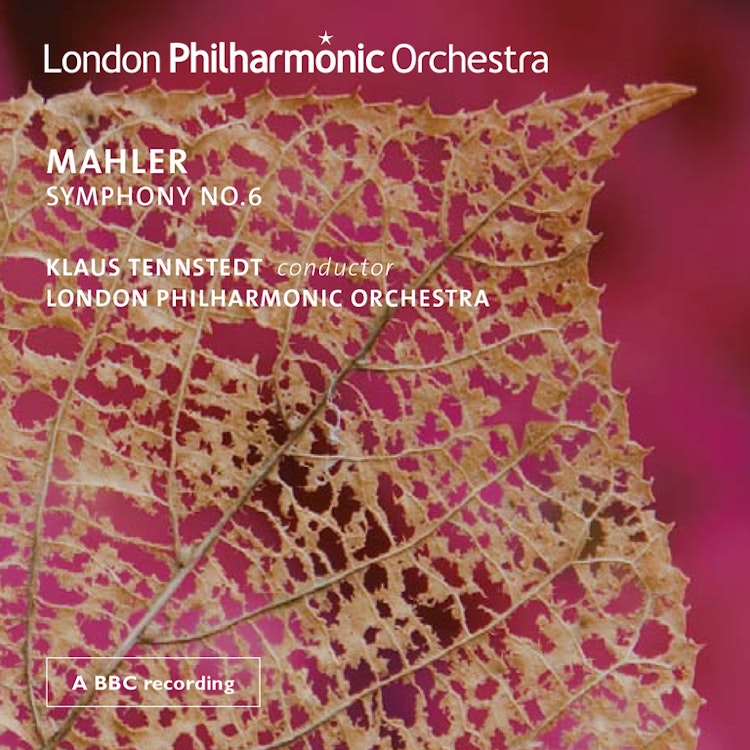
Klaus Tennstedt, the conductor on this recording, uses the Critical Edition of Mahler's Sixth Symphony, which places the scherzo movement second, following Erwin Ratz's claim that Mahler reverted to this original order.