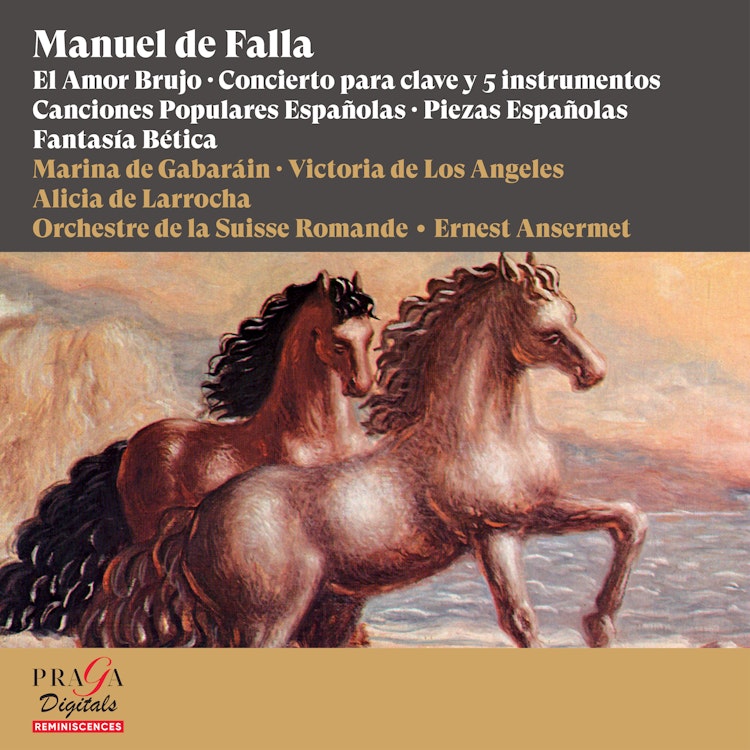
Manuel de Falla: El Amor Brujo, Concierto para clave y 5 instrumentos, Canciones Populares Españolas, Piezas Españolas, Fantasía Bética
4/1/2013, 25 Tracks, 1:18:51
Featuring
Ernest Ansermet
Marina de Gabarain
Ataúlfo Argenta
Robert Veyron-Lacroix
Lopez del Cid
Servando Serrano
Leocadio Parra
Luis Anton
Carlos Baena
Gonzalo Soriano
Victoria de los Angeles
Alicia de Larrocha
Orchestre de la Suisse Romande
Manuel de Falla
Did you know?
1/7
Composer's Artistic Vision
In his Siete Canciones Populares Españolas, Manuel de Falla used authentic folk song texts but varied the melodies and piano accompaniments with contemporary harmonies and countermelodies.
Composition History
The lullaby 'Nana' from Siete Canciones Populares Españolas is a traditional tune that Manuel de Falla's mother and wet nurse sang to him as a child.
Composer's Artistic Vision
Manuel de Falla's nationalistic aim in his Cuatro piezas españolas was to evoke the spirit of the Spanish people, their song, and their dance, rather than strictly quoting folk songs.
Compositional Technique
The Fantasia Bética for piano stylizes elements of Andalusian folk dances with a "crude and acrid violence," while also incorporating the "mystical" aspects of Gypsy art.
Composition History
The Concerto for Harpsichord marks a 'point of no return' in Manuel de Falla's musical thinking, as his only subsequent work of importance, Atlántida, remained unfinished.
Performer Biography
Victoria de los Angeles, a soprano, completed a six-year vocal course at the Conservatory of Barcelona in just three years, winning every available prize.
Composition History
El amor brujo (Love the enchanter) was originally requested by Pastora Imperio, a famous flamenco dancer, and premiered by her troupe in Madrid in 1915.
You might also enjoy...
Doce Danzas Espanolas/Danza Lenta/Allegro De Conceierto
Charles Koechlin: Piano Works
Albeniz: Iberia, Book I & Ii, Mompou: Cançons i Danses