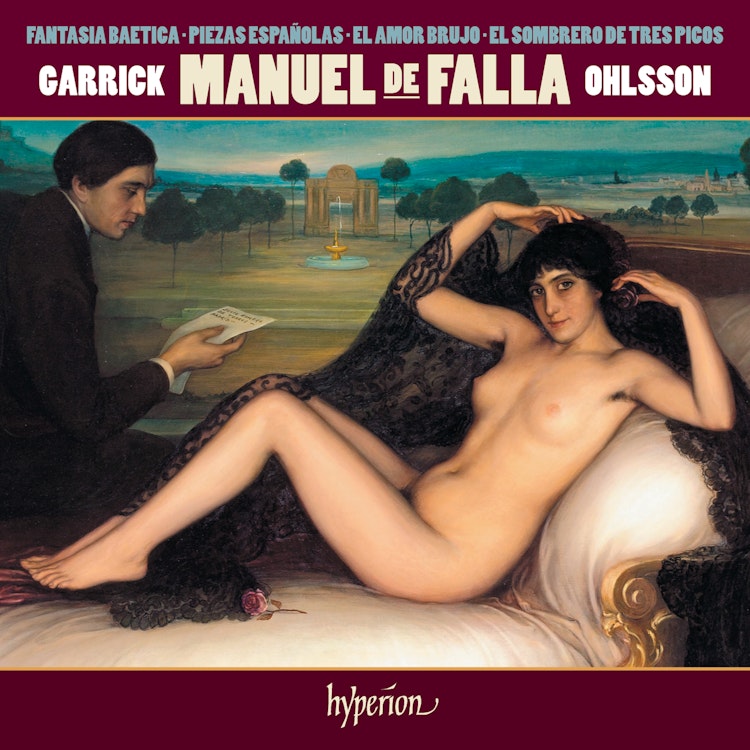
Manuel de Falla: Fantasia Baetica & Other Piano Music
2/16/2024, 16 Tracks, 1:09:58
Featuring
Garrick Ohlsson
Manuel de Falla
Did you know?
1/7
Compositional Technique
The Fantasia Baetica features guitar figurations transformed for piano, evocations of the harpsichord, and elements of flamenco singing and Andalusian dancing.
Performer Biography
Garrick Ohlsson, the pianist on this recording, won the Chopin International Piano Competition in 1970 and is known for his wide repertoire and masterly performances.
Composition History
Manuel de Falla's Cuatro piezas españolas were published in Paris in 1909, recommended by Debussy, Ravel, and Dukas.
Compositional Technique
Manuel de Falla's Cuatro piezas españolas blend harmonic invention and elegant counterpoint, using Spanish dance rhythms and folk-like tunes with economical textures.
Composer's Artistic Vision
Manuel de Falla called the structural balance in his works 'internal rhythm,' defining it as 'the harmony in the deepest sense of the word born of the dynamic equilibrium between the sections.'
Composition History
The Fantasia Baetica, Manuel de Falla's last major piano work, was composed in 1919 for Arthur Rubinstein, who later found it too long.
Composer Biography
Manuel de Falla, the composer, moved to Madrid in 1896 and later spent seven years in Paris, where he befriended Debussy, Ravel, and Dukas.
You might also enjoy...
Granados, E.: Piano Music (Complete)
Solo
The Unknown Ives
Secrets of Armenia
Four Worlds
Dumka
Tcherepnin: 5 Concert Etudes / Gould: Pieces of China / Adams: China Gates