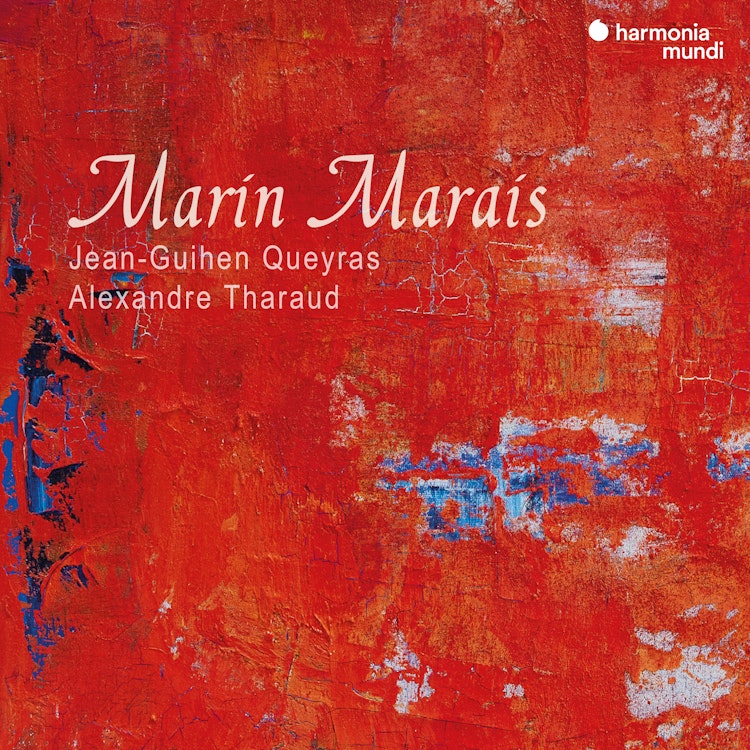
Marin Marais: Folies d'Espagne, La Rêveuse & Other Works
1/27/2023, 17 Tracks, 1:02:11
Featuring
Alexandre Tharaud
Jean-Guihen Queyras
Guillaume Gallienne
Marin Marais
Did you know?
1/7
Compositional Technique
Marin Marais's five books of viol pieces were conceived as a teaching method, with the composer recommending that all pieces be played and restarted every fortnight.
Composer Biography
Marin Marais, born into a shoemaker's family, rose to the court of King Louis XIV thanks to his uncle, a curate who recognized his talent and enrolled him in a renowned choir school.
Interpretation
Jean-Guihen Queyras, playing the viol line on the cello, had to invent different chords or omit double stops that are not possible on the cello, as Marin Marais himself suggested in a 1723 preface.
Interpretation
In transcribing Marin Marais's works, Alexandre Tharaud aimed for the piano to evoke the sound of a lute, and sometimes incorporated subtle countermelodies as nods to 20th-century repertoire, like Poulenc.
Compositional Technique
Marin Marais meticulously notated bow strokes, ornaments, and left-hand fingerings in his publications, inventing a system of signs to ensure his music was played exactly as he intended.
Composer Biography
Marin Marais was a student of Sainte-Colombe for the viol and Jean-Baptiste Lully, the most powerful musical figure in the kingdom, who trained him as a conductor and introduced him to opera.
Interpretation
Jean-Guihen Queyras and Alexandre Tharaud transcribed Marin Marais's viol pieces for cello and piano to explore less predictable territories for their instruments, moving away from common stereotypes.