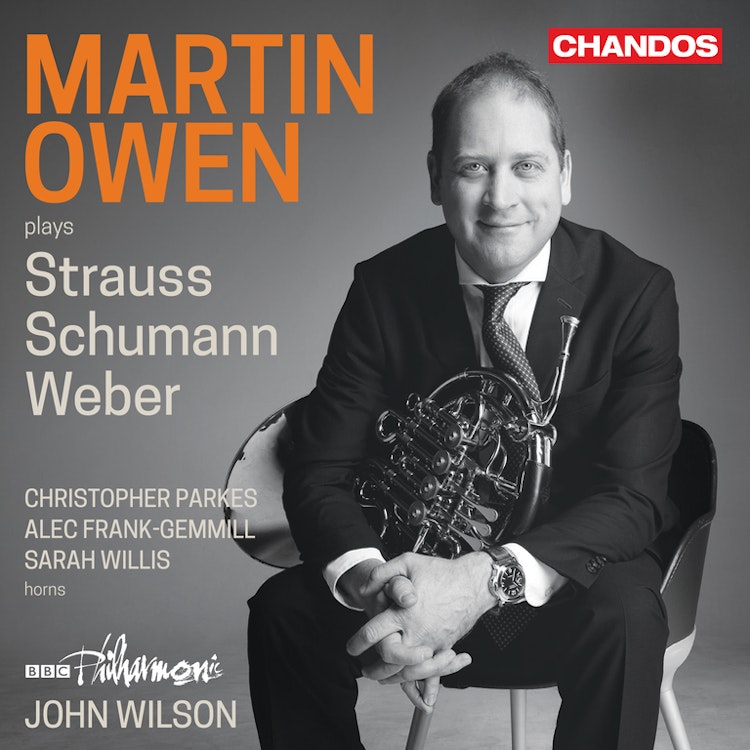
Richard Strauss's Second Horn Concerto, composed in 1942 during wartime, was part of a series of works he ironically called 'superfluous absolute music,' representing a therapeutic retreat into classical craftsmanship.
Performer Biography
Sarah Willis, one of the horn soloists, was told by a schoolteacher that 'the horn is for boys,' a remark that served as a challenge and led her to become the first female brass player in the Berliner Philharmoniker.
Composer Biography
Richard Strauss's First Horn Concerto, written when he was 19, reflects the influence of his father, Franz Strauss, who was the principal horn of the Munich Court Orchestra and a stunning player.
Composition History
Robert Schumann's Concertstück for four horns was sketched in just two days in February 1849, after he was elated with the results of his earlier Adagio und Allegro for horn and piano.
Recording & Production
This album was recorded in 24-bit / 96 kHz, a high-resolution format that offers a dynamic range up to 48 dB greater and 256 times the resolution of standard 16-bit recordings.
Compositional Technique
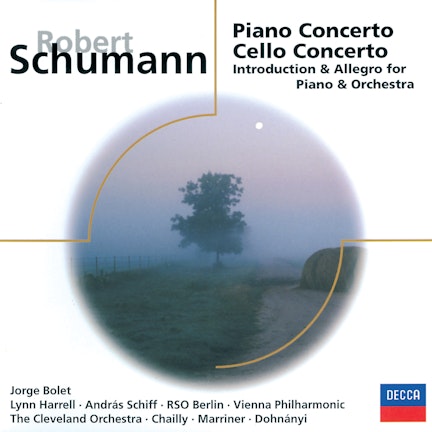
Schumann's Concertstück, like his Cello Concerto, features three movements played without a break, reflecting his love for fluid transitions where movements or 'moods' succeed one another like states in a dream.
Compositional Technique
Carl Maria von Weber's Concertino for horn requires the virtuoso use of hand-stopping, lip bending, and even 'multiphonics' (simultaneous blowing and humming) to enhance the capabilities of the valveless natural horn.
You might also enjoy...
Daniel Barenboim - A Portrait
Complete Concerto Recordings
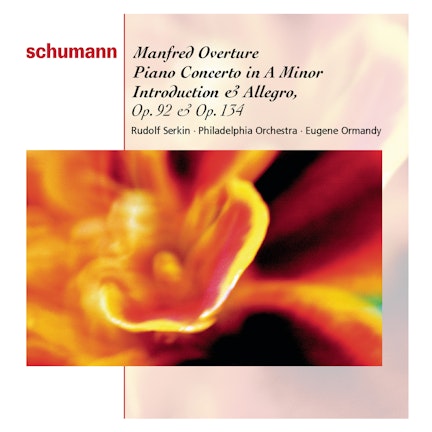
Manfred Overture, Concerto in A minor For Piano & Orchestra, Intro & Allegro Appassionato OP. 92, Intro & Conc Allegro Op. 134