The Sonata for cello and piano No 1 was premiered in Paris by Pierre Fournier, a cellist, and Rudolf Firkus v ny, a pianist, on the eve of the composer's world collapsing.
Composition History
Martinu's Sonata for cello and piano No 1 was an outlet for his profound sadness over the German occupation of his homeland, Czechoslovakia, in 1939.
Compositional Technique
Martinu rarely adhered to strict Classical forms, preferring a more fluid process of constant evolution, which he called his version of 'fantasia'.
Composer Biography
Martinu had a peculiar habit of wandering the streets at night, which his American neighbors were warned not to interrupt, as it was during these times that he conceived his musical ideas.
Composer Biography
Bohuslav Martinu's earliest years were spent living at the top of a church tower in Polic v ka, a small town in South Bohemia.
Historical Context
Martinu was on the Gestapo blacklist and was forced to flee Paris before the German advance in 1940, eventually arriving in New York in 1941.
Composer's Artistic Vision
Martinu was considered an eclectic composer, selecting the best from various influences and transforming them into his own recognizable style.
You might also enjoy...
Martinů: Works for Cello & Piano
Bohuslav Martinů: Small Pieces for Cello and Piano
Martinů: Cello Sonatas Nos. 1-3
Martinu: Cello Sonatas
Martinu: Chamber Music with Flute
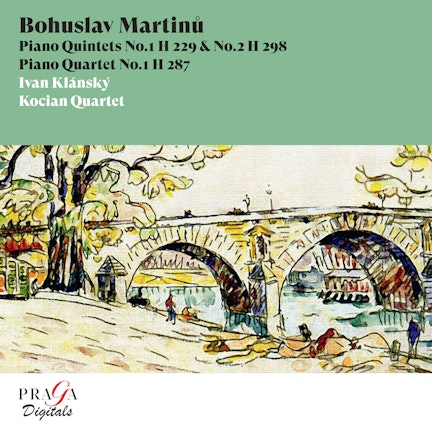
Bohuslav Martinů: Piano Quintets & Piano Quartet
With Affection
Martinů: Complete Works for Piano Trio
Martinu: Piano Quintets Nos. 1 & 2 / Sonata for 2 Violins and Piano
Bohuslav Martinů: The Piano Trios
Martinů, B.: Musique De Chambre No. 1 / Les Rondes / Nonet / Fantasia
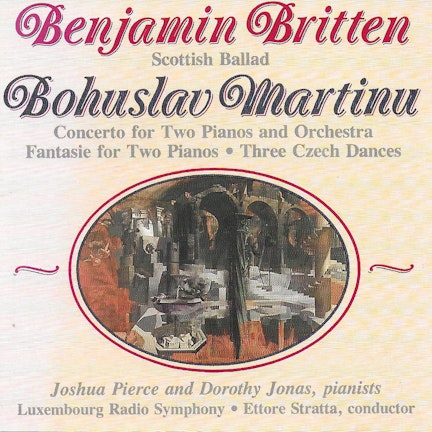
Britten: Scottish Ballad - Martinů: Concerto for 2 Pianos and Orchestra, Fantasie for 2 Pianos & 3 Czech Dances
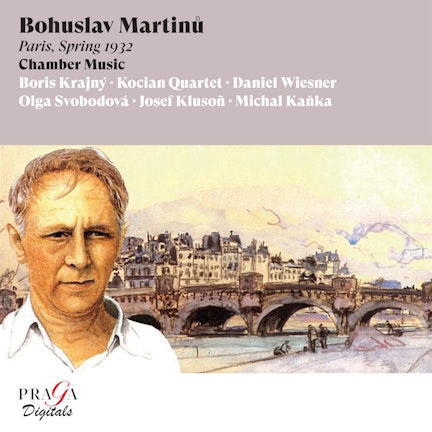
Bohuslav Martinů: Paris, Spring 1932 (Chamber music)