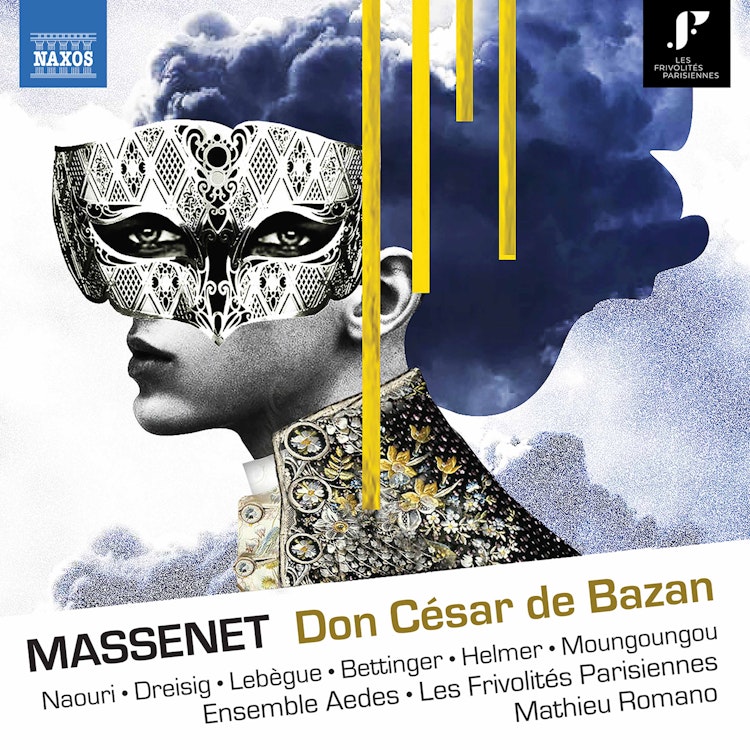
Jules Massenet’s first full-length opera is little known today, but amply demonstrates the French composer’s prodigious talents. Don César de Bazan is an opéra-comique on a Spanish theme best known today for its Sevillana, a soprano showpiece. Ensemble Aedes and Les Frivolités Parisiennes’ recording is conducted by Mathieu Romano and features a cast headed by Laurent Naouri and Elsa Dreisig.
Featuring
Laurent Naouri
Elsa Dreisig
Marion Lebègue
Thomas Bettinger
Christian Helmer
Christian Rodrigue Moungoungou
Mathieu Romano
Ensemble Aedes
Les Frivolités Parisiennes
Jules Massenet
Did you know?
1/7
Recording & Production
This recording of "Don César de Bazan" uses a new edition researched by Les Frivolités Parisiennes for a 2016 revival, which aimed to restore the author's original vision by opening cuts.
Composition History
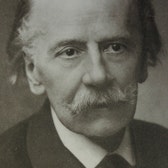
Jules Massenet, the composer, wrote the score for "Don César de Bazan" in just a few weeks, accepting the challenge of a hurried production.
Composer's Artistic Vision
The opera "Don César de Bazan" reflects Jules Massenet's characteristic mature style, with a trend towards a more symphonic approach and considerable orchestral forcefulness.
Composition History
This opera, "Don César de Bazan," was Jules Massenet's first full-length opera to be produced, following a one-act opera five years earlier.
Compositional Technique
Jules Massenet's score for "Don César de Bazan" prominently features Spanish motifs like fandangos, boleros, sevillanes, and seguidillas, treated with knowledge and talent.
Critical Reception
Despite its intrinsic qualities, "Don César de Bazan" was not initially a success and was largely forgotten after only 13 performances, before a modern revival in 2016.
Composition History
The original orchestral parts for "Don César de Bazan" were destroyed in a fire at the Salle Favart in 1887, leading Massenet to compose a second version with new orchestration.
You might also enjoy...
Gounod & Massenet: Arias
French Tenor Arias
French Tenor Arias
Russian Opera Arias
A Tribute to Gilbert Duprez
French Opera Arias
Bizet: Carmen (Highlights)
The French Collection - Opera Arias By Bizet, Berlioz, Massenet, Gounod, Verdi
Theo Adam singt aus russischen und italienischen Opern