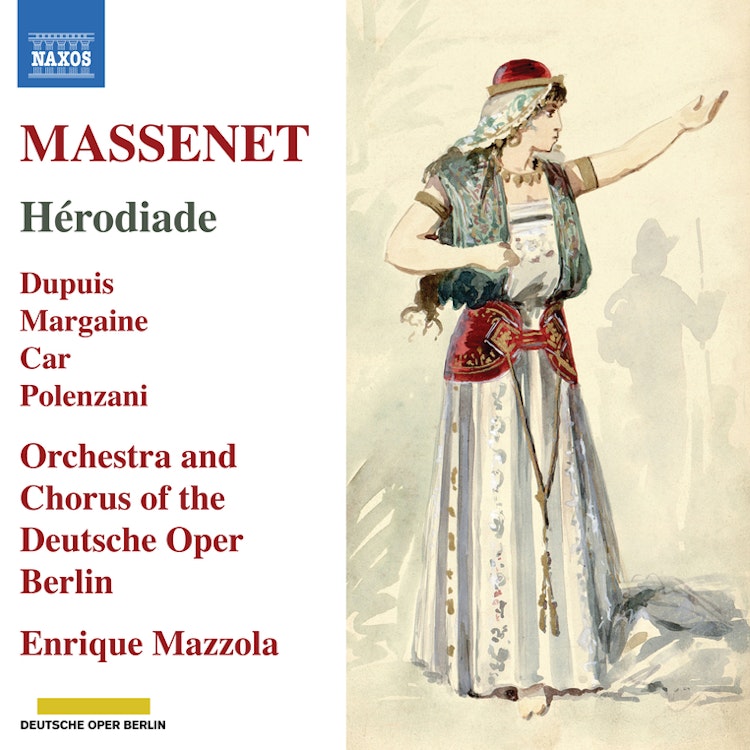
The opera Hérodiade was controversial in France due to increasing tensions between the new Third Republic and the Catholic Church, which culminated in the severance of diplomatic relations in 1904.
Composer's Artistic Vision
Massenet's Hérodiade was considered scandalous by some, including Giuseppe Verdi, because it depicted John the Baptist and Salomé in a way that suggested a romantic relationship.
Critical Reception
Hérodiade was rejected by the Paris Opéra initially but achieved great success when it was finally staged there in 1921, receiving over 200 performances in 20 years.
Compositional Technique
Massenet's Hérodiade incorporates a melody from 19th-century Jewish synagogue practice for the traditional Hebrew prayer 'Schemâh Israël' in Act III.
Composer's Artistic Vision
Massenet intended for the character of Jean (John the Baptist) in Hérodiade to represent Christ himself, and Salomé to represent Mary Magdalene, aiming to create a mystical aura.
Composition History
Giulio Ricordi, the influential Italian publisher of Verdi and Puccini, initially suggested the Herodias subject to Massenet, hoping for a premiere at La Scala in Milan.
Composition History
Massenet's opera Hérodiade, written in 1878-79, premiered in Brussels in 1881, a quarter-century before Richard Strauss's opera on the subject of Salome.