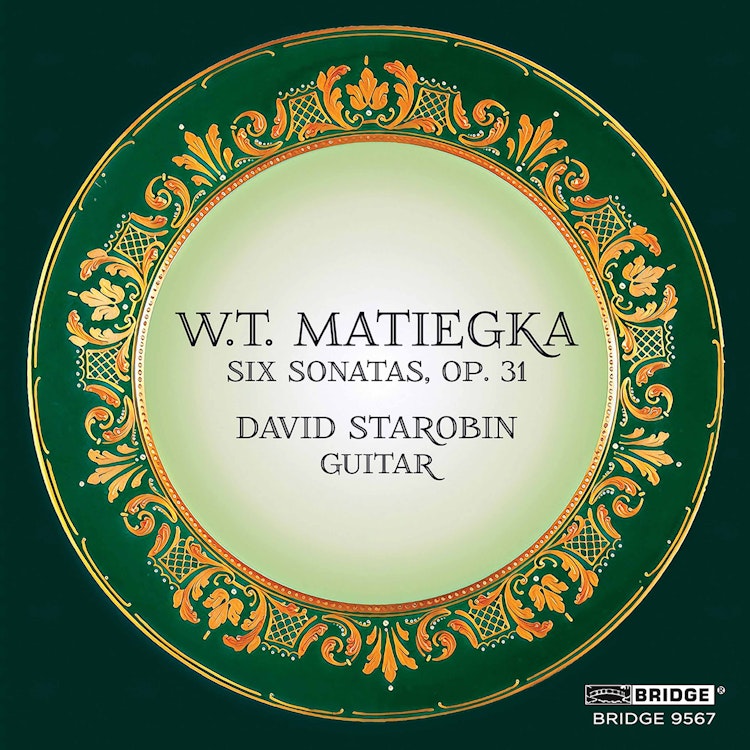
Matiegka: 6 Sonates progressives pour guitare, Op. 31
4/1/2022, 18 Tracks, 1:14:31
Featuring
David Starobin
Wenzel Thomas Matiegka
Did you know?
1/7
Performer Biography
David Starobin, the guitarist on this recording, dedicated a major part of his career to advocating for lesser-known composers, making this album of Matiegka's work a fitting final studio recording.
Composer Biography
Wenzeslaus Thomas Matiegka, a Bohemian lawyer, pianist, violinist, cellist, and church musician, arrived in Vienna in 1800 and was among the first to recognize the guitar's potential in the expanding Viennese music market.
Historical Context
Music became a primary source of social entertainment in Vienna, largely replacing card playing, with many homes dedicated to playing the latest sonatas and string quartets.
Instruments
The guitar used for this recording is a Hermann Hauser Viennese model, made in Munich in 1935.
Compositional Technique
Matiegka's guitar sonatas feature unusually detailed notation, including extensive expression, articulation, and dynamic markings, which create unpredictable rhythms within classical structures.
Composition History
The young Franz Schubert was so impressed by Matiegka's Notturno, Op. 21 (a flute, viola, guitar trio) that he added a cello part to it for family music-making.
Historical Context
In the early 19th century, Vienna was a vibrant musical city where music transcended social barriers, with aristocracy, bourgeoisie, princes, and their vassals enjoying music together.
You might also enjoy...
Calace: Complete Guitar Works
Antonio Ruiz-Pipó: Complete Music for Guitar
Exclusive: Caprice
The Alexandre Lagoya Edition - Complete Philips Solo Recordings
Junhong Kuang Guitar Recital
19th Century Guitar Music
The Devil's Caprice
Castelnuovo-Tedesco, Berkeley, Rodrigo & Vassiliev: Works for Guitar