The work "Membra Jesu nostri" is structured into seven cantatas, each contemplating one of the seven venerated members of Christ's body, from his feet to his face.
Recording & Production
This recording of "Membra Jesu nostri" celebrates the 20th Anniversary of the Conductus Ensemble, an ensemble dedicated to Baroque sacred music, especially German Baroque music.
Historical Context
The city of Lübeck, where Buxtehude worked, was a strategic crossroads for merchants and artists, benefiting from a buoyant economy and a bourgeois population passionate about music, which funded cultural activities like the "Abendmusiken."
Composition History
Dieterich Buxtehude composed "Membra Jesu nostri" in 1680, a work that some scholars believe was commissioned by the Swedish court, while others suggest it was for his "Abendmusiken" concert series.
Composer's Artistic Vision
Buxtehude's "Membra Jesu nostri" is a work of spiritual edification and mystical inspiration, intended to be sung with the humblest devotion.
Composer Biography
Dieterich Buxtehude, the composer of "Membra Jesu nostri," held one of the most important organist positions in central and northern Europe for almost forty years, in Lübeck, until his death in 1707.
Compositional Technique
Each of the seven cantatas in "Membra Jesu nostri" has a consistent internal structure of 'sonata-chorus-aria-chorus,' contributing to the work's symmetry and unity.
You might also enjoy...
J.S. Bach: Easter Oratorio
Bach, J.S.: Cantatas, Bwv 23-26
Bach, J.S.: Cantatas, Bwv 182-184
Bach, J.S.: Cantatas, Bwv 130-132
Günther Ramin conducts Bach Cantatas
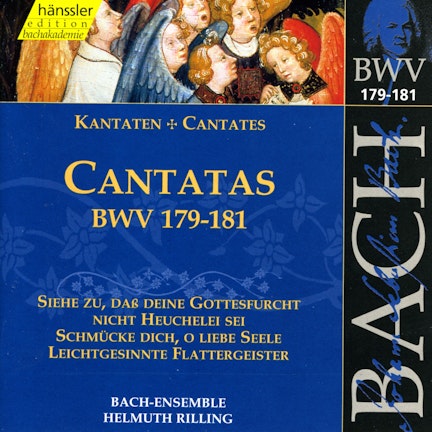
Bach, J.S.: Cantatas, Bwv 179-181
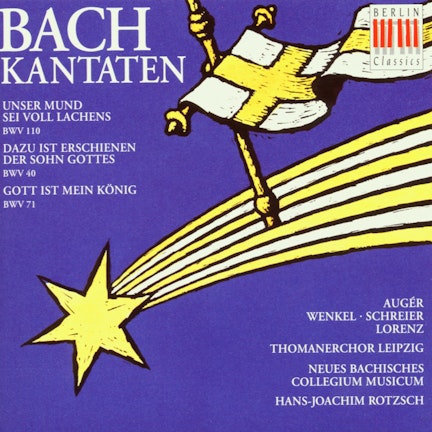
Bach: Cantatas BWV 110, 40 & 71
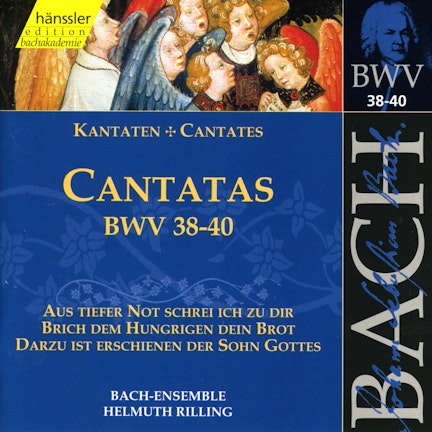
Bach, J.S.: Cantatas, Bwv 38-40
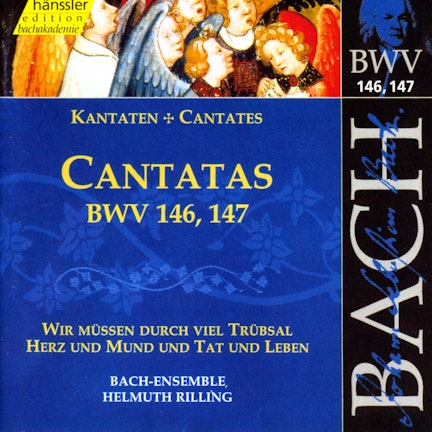
Bach, J.S.: Cantatas, Bwv 146-147
Bach, J.S.: Cantatas, Bwv 21-22
Bach: Kantaten - Unser Mund sei voll Lachens / Dazu ist erschienen der Sohn Gottes / Nun ist das Heil und die Kraft
Peter Schreier: Arien aus Kantaten von Johann Sebastian Bach