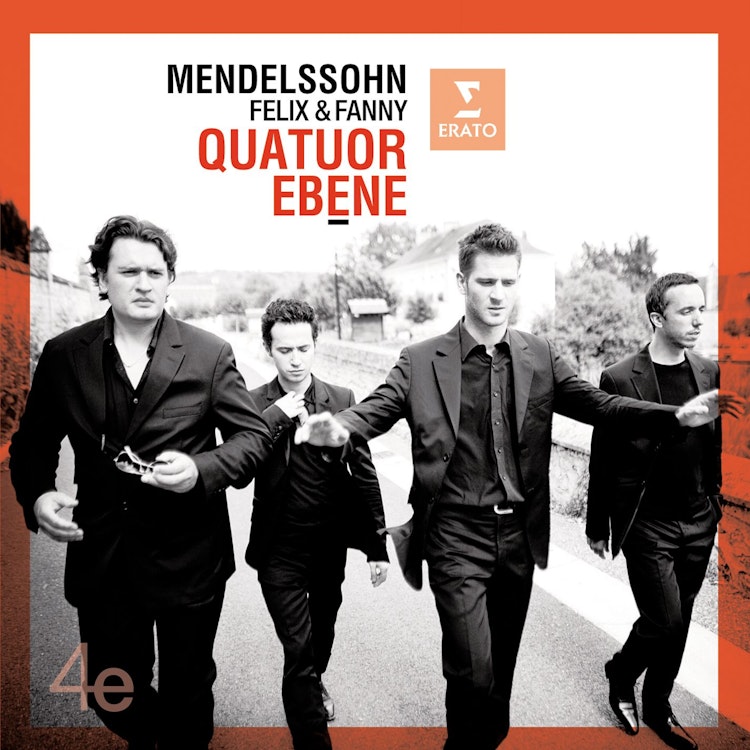
This album was recorded at La Ferme de Villefavard en Limousin, a converted granary in the French countryside known for its exceptional acoustics, designed by internationally renowned acoustician Albert Yaying Xu.
Composer Biography
Fanny Mendelssohn-Hensel, despite being a woman from a wealthy Jewish family, was prohibited from public performance by her father and brother, but she hosted influential musical evenings at their Berlin mansion.
Compositional Technique
Felix Mendelssohn's String Quartet No. 2, Op. 13, uses a recurring motif from his song 'Frage' ('Is it true?'), echoing Beethoven's 'Muss es sein?' ('Must it be?') from his Op. 135 Quartet.
Composition History
Felix Mendelssohn's String Quartet No. 6, Op. 80, was written in the months following Fanny's sudden death and is referred to as his 'Requiem for Fanny'.
Composer Biography
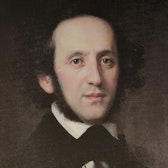
Felix Mendelssohn and Fanny Mendelssohn-Hensel were siblings who shared a deep bond; Felix referred to Fanny as his 'dear Cantor' and always showed her his works first.
Composer Biography
Fanny Mendelssohn-Hensel was the only female Kapellmeister of the nineteenth century, conducting the best instrumentalists and choral singers in Berlin at her private musical evenings.
Interpretation
For this recording, the Quatuor Ebène swapped their violinists, with Gabriel Le Magadure playing the first violin part in Felix Mendelssohn's Op. 13, to offer a different perspective on the composer.
You might also enjoy...
Mendelssohn Felix and Fanny
Mendelssohn Felix and Fanny
Shostakovich: String Quartets Vol. 1
Gérard Pape: String Quartets
String Quartets
Janácek: Die Streichquartette
Miniatures for Strings
Miniatures for Strings
Universum
Williams Bergsma: Third String Quartet No. 1 - Lukas Foss: String Quartet No. 1