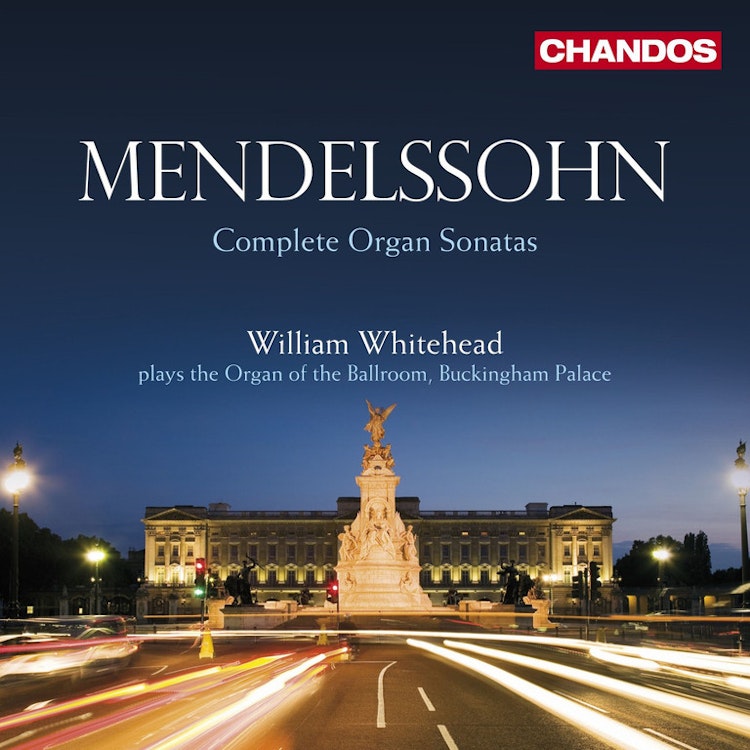
Each of Mendelssohn's Organ Sonatas makes a journey from 'Protestant earnestness' to a 'lighter-touched, bourgeois English style', often concluding with melodic charm and private piety.
Historical Context
Mendelssohn's organ performances in Britain, mixing improvisation with Bach interpretation, highlighted deficiencies in English organs and helped propel their design towards the German system of pedal-boards.
Instruments
The Buckingham Palace Ballroom organ represents an intermediate stage in the development of the 'German System' pedal board, which Mendelssohn frequently encountered during his English visits.
Performer Biography
William Whitehead, the organist on this recording, won first prize at the Odense International Organ Competition in Denmark in 2004, boosting his concert career.
Composer's Artistic Vision
Mendelssohn's Organ Sonatas combine his customary style with Bachian counterpoint, the Protestant Chorale, and a 'sacred-song' style related to his choral writing.
Composition History
Mendelssohn's six Organ Sonatas were originally commissioned by the publishing firm Coventry and Hollier as 'voluntaries' but evolved into full-blown sonatas.
Instruments
The organ used for this recording, located in the Ballroom of Buckingham Palace, was originally built in 1818 by Henry Cephas Lincoln for the Prince Regent's Brighton Pavilion.
You might also enjoy...
Sonaten für Orgel
Rheinberger: Complete Organ Sonatas
Rheinberger, J.G.: Organ Works, Vol. 1
Ritter: Complete Organ Sonatas
Reger: Organ Sonata No. 2 in D Minor, Op. 60
Rheinberger, J.G.: Organ Works, Vol. 6
Ritter: Complete Organ Sonatas
Mendelssohn-Bartholdy: Six Sonatas for Organ, Op. 65