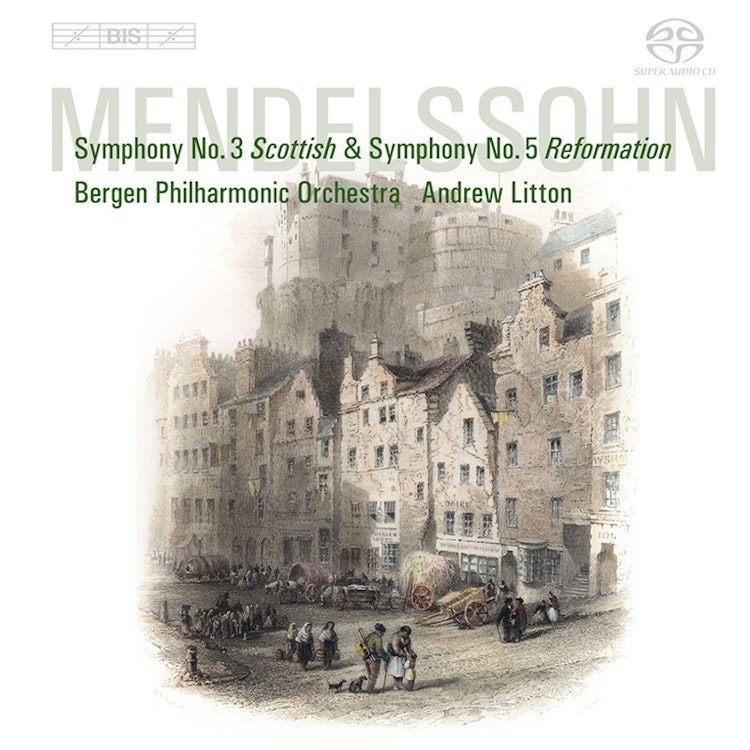
Mendelssohn, Felix: Symphonies Nos. 3, "Scottish" and 5, "Reformation"
7/1/2010, 8 Tracks, 1:10:16
Featuring
Andrew Litton
Bergen Filharmoniske Orkester
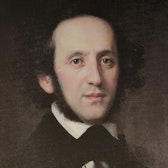
Felix Mendelssohn Bartholdy
Did you know?
1/7
Composition History
Mendelssohn's Symphony No. 3, 'Scottish', was not completed until 1841-42, despite being conceived in 1829, because other travels and compositions, like the 'Italian Symphony', took precedence.
Compositional Technique
An innovation in Mendelssohn's Symphony No. 3, 'Scottish', is that all movements follow each other without pause, a technique the composer used "to tidy up the pauses that destroy the atmosphere between the movements."
Critical Reception
Mendelssohn himself later distanced himself from his Symphony No. 5, 'Reformation', stating in 1838 that it was the piece he would "most like to burn," and he obstructed its performance and publication.
Composition History
Mendelssohn's Symphony No. 5, 'Reformation', was written for the tercentenary of the Augsburg Confession, a Lutheran profession of faith from 1530.
Composer Biography
Felix Mendelssohn Bartholdy, the composer, described London in 1829 as "the most grandiose and most complicated monstrosity in the whole world!" during his first major foreign trip.
Critical Reception
Mendelssohn's Symphony No. 5, 'Reformation', was initially rejected by musicians in Paris for being "too academic, too much fugato, too little melody."
Composition History
Mendelssohn conceived the beginning of his Symphony No. 3, 'Scottish', in 1829 after visiting the ruined chapel where Mary Stuart was crowned Queen of Scotland.
You might also enjoy...
Mendelssohn, Felix: Symphony No. 2, "Lobgesang"
Mendelssohn: Symphonies Nos. 1 & 3
Mendelssohn: Symphonies Nos.3 & 4
Mendelssohn : Symphony No.2, 'Hymn Of Praise'
Mendelssohn: Symphony No. 4 in A Major, Op. 90, MWV N 16 "Italian"