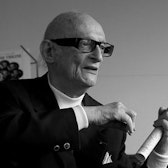
Critics praised Schwalbé for his rare combination of musicality and virtuosity, with one French critic comparing his glorious sound to that of only five or six other greats.
Instruments
The German philanthropist Axel Springer was so impressed by Schwalbé's talent that he loaned him a 1709 Stradivarius violin, known as the 'King Maximilian', for his entire career.
Performer Biography
Schwalbé's international career was interrupted by World War II, after which Ernest Ansermet invited him to be the first concertmaster of the Orchestre de la Suisse Romande.
Performer Biography
Michel Schwalbé, the violinist on this album, was a child prodigy who gave his first concert at age ten.
Performer Biography
In 1957, Herbert von Karajan invited Schwalbé to become the first concertmaster of the Berlin Philharmonic Orchestra, where he remained until 1985.
Performer Biography
Schwalbé studied with Moritz Frenkel, a student of Leopold Auer, and later with Georges Enesco and Pierre Monteux in Paris, combining two great schools of playing.
You might also enjoy...
Paganini: Violin Concerto No. 1
Haydn: Violin Concertos
Liebesfreud
Zino Francescatti plays Lalo & Vieuxtemps
Rolla: 3 Violin Concertos
1930s Violin Concertos, Vol. 2
J.S. Bach: Violin Concertos
Mendelssohn & Tchaikovsky: Violin Concertos
Bruch: Scottish Fantasy, Op. 46 / Violin Concerto No. 1 in G Minor, Op. 26