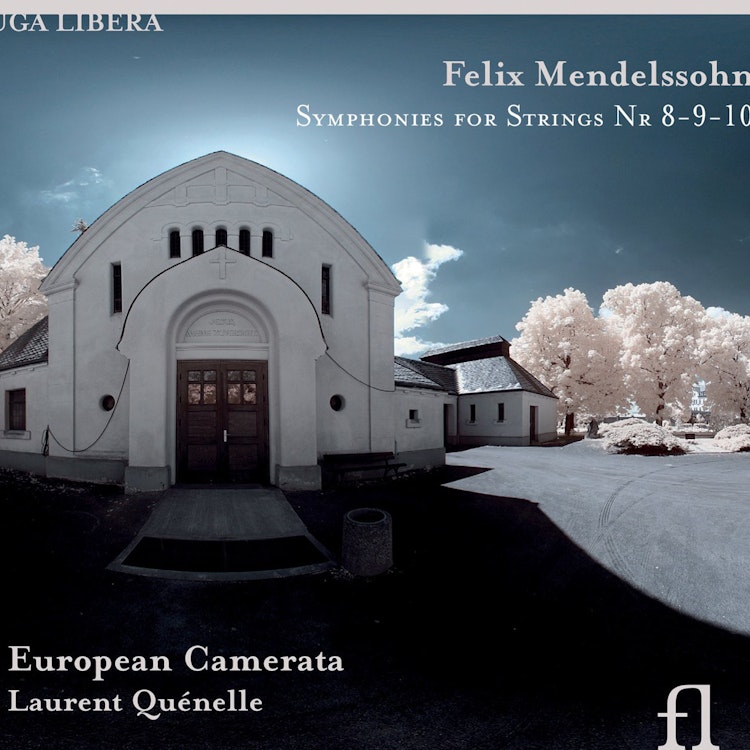
The European Camerata performs standing up and without a conductor, led only by a solo violin, reflecting an 18th-century orchestral practice.
Recording & Production
This recording was made in Paris at the Sainte-Clotilde chapel from April 22-24, 2009, with Alessandra Galleron as sound engineer and master.
Performer Biography
The members of European Camerata are seasoned artists who also belong to prestigious European orchestras like the London Symphony Orchestra and Orchestre de Paris.
Compositional Technique
Mendelssohn's string symphonies often use four instrumental parts (two violins, violas, and basses), but sometimes expand to five or even six by dividing violas, cellos, and double basses.
Composer Biography
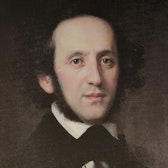
Felix Mendelssohn, the composer, was a child prodigy who excelled in many areas, including ancient languages, counterpoint, horse-riding, keyboards, strings, chess, and dance.
Performer Biography
Laurent Quénelle, the artistic director of European Camerata, founded the ensemble in 1995 after a session with the European Union Youth Orchestra.
Composer's Artistic Vision
Mendelssohn's string symphonies, composed between 1821-1823, demonstrate his desire to master orchestral writing for strings, already possessing an expert contrapuntal hand.