A musicologist friend advised Mendelssohn to set Goethe's poems without a choir, believing an orchestra alone could better convey a calm sea.
Album & Artwork
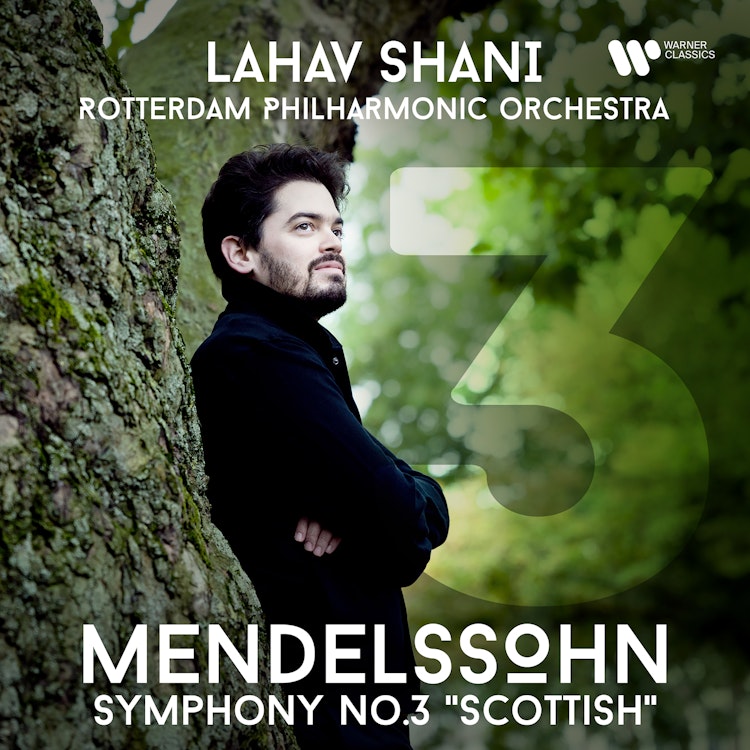
The album's first two pieces, Mendelssohn's 'Scottish' Symphony and his overture Meeresstille und glückliche Fahrt, are united by the theme of water.
Composer's Artistic Vision
Mendelssohn did not include folk tunes in his 'Scottish' Symphony, finding the local folk music he encountered in Scotland to be 'infamous, vulgar, out-of-tune trash'.
Composition History
Mendelssohn's overture Meeresstille und glückliche Fahrt was inspired by two poems by the German poet Goethe, which describe a merchant ship's perilous journey from Sicily.
Critical Reception
Robert Schumann once mistook Mendelssohn's 'Scottish' Symphony for his 'Italian' Symphony and envisioned Italian landscapes while listening to it.
Cultural Impact
Richard Wagner 'borrowed' from the chromatic lines in the coda of Mendelssohn's 'Scottish' Symphony for his 'sea opera' The Flying Dutchman.
Composition History
Mendelssohn found the beginning of his 'Scottish' Symphony in 1829, inspired by a visit to the ruined chapel where Mary, Queen of Scots, was crowned.
You might also enjoy...
ARSM I, Vol. 39. Rimsky-Korsakov
Dukas: The Sorcerer's Apprentice - Strauss: Till Eulenspiegels lustige Streiche, Op. 28 - Saint-Saens: Danse Macabre
Tchaikovsky: 1812 Overture / Romeo and Juliet / Capriccio Italien
Esa-Pekka Salonen - A Nordic Festival
Leifs: Geysir and Other Orchestral Works
Bax - Delius - Ireland
Marriner & The Academy - 20th Century Classics
Classics at the Pops
Adagietto
Barber: Works for Orchestra
The Tchaikovsky Album
Tchaikovsky: 1812 Overture; Capriccio italien; Romeo and Juliet; Marche slave