Robert Schumann, a close friend of Mendelssohn and a composer and critic, praised Mendelssohn's Piano Sonata in E major, Op. 6, as among the most beautiful works since Beethoven, Weber, Hummel, and Moscheles.
Compositional Technique
The Phantasie, Op. 28, also known as the 'Scottish Sonata', might evoke Scottish imagery through elements like a preludial arpeggiation suggesting a Celtic harp, and melancholy themes with an 'Ossianic connection'.
Recording & Production
This recording utilizes 24-bit / 96 kHz technology, which provides a dynamic range up to 48 dB greater and 256 times the resolution of standard 16-bit recordings, aiming for a better sound reproduction.
Composer Biography
Felix Mendelssohn, the composer, was a child prodigy, composing his first undisputed masterpiece, the Octet for strings, Op. 20, at the age of sixteen.
Composition History
Mendelssohn's Capriccio, Op. 5, was considered so technically demanding that he initially believed no 'Miss' could play it, but he was later greatly impressed by a performance by Delphine von Schauroth.
Composition History
Mendelssohn's Piano Sonata in B flat major, Op. post. 106, may have been conceived and written as a tribute to Beethoven, who had died shortly before Mendelssohn dated the autograph manuscript.
Historical Context
During Mendelssohn's time, 'classical' genres like sonatas and symphonies were increasingly challenged by shorter compositions, especially in piano music, which saw an explosion of studies and 'character pieces'.
You might also enjoy...
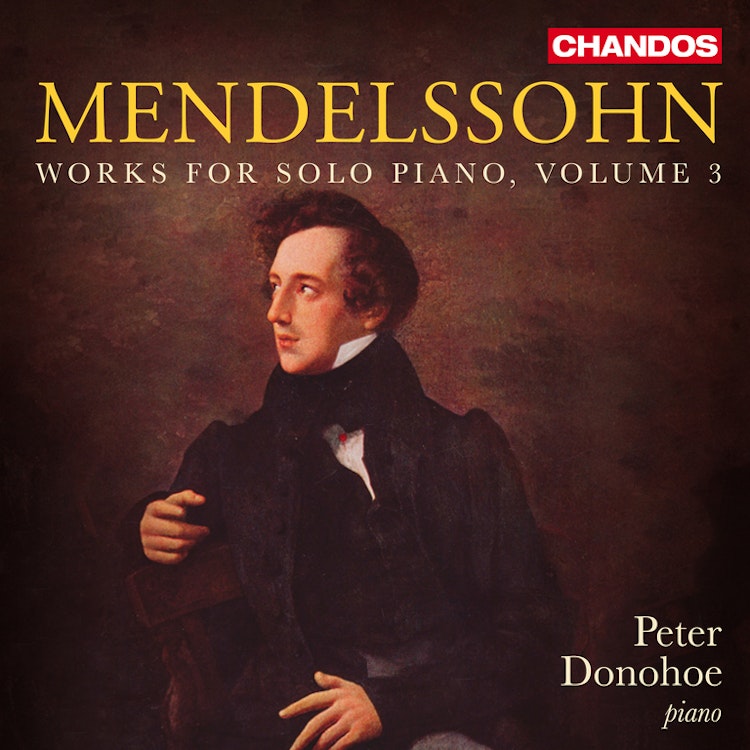
Mendelssohn: Piano Music
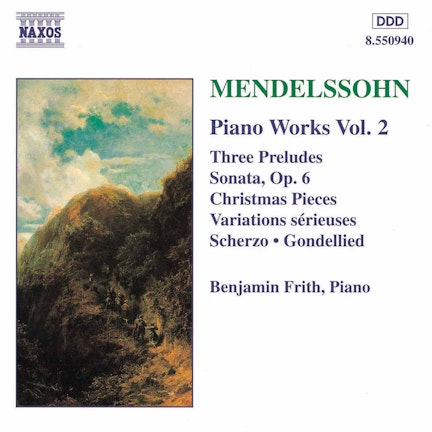
Felix Mendelssohn: Piano Works
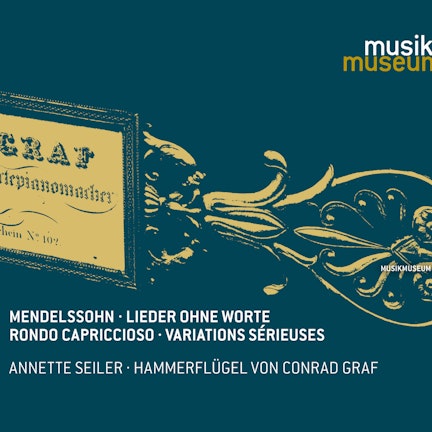
Mendelssohn: Lieder ohne Worte, Rondo capriccioso & Variations sérieuses
Mendelssohn: Songs without Words
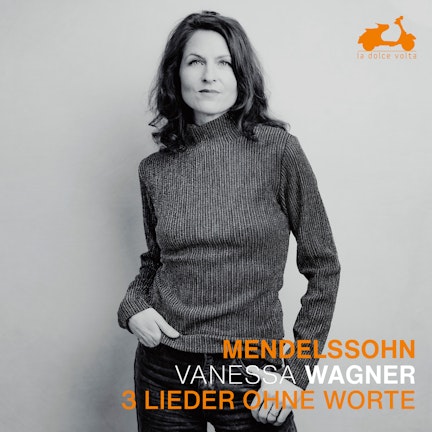
Mendelssohn: 3 Lieder ohne Worte
Mendelssohn: Pieter-Jelle de Boer
Mendelssohn: Lieder ohne Worte
Valerie Tryon Plays Mendelssohn
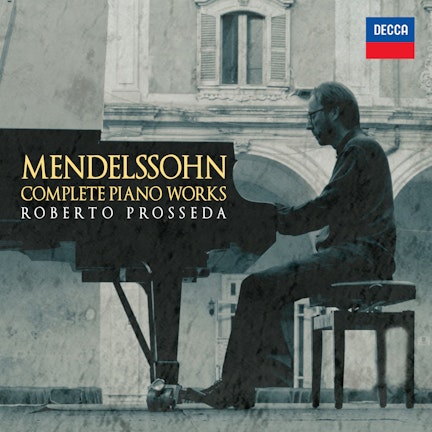
Mendelssohn: Complete Piano Works
MENDELSSOHN: Sonata in E Major / Variations serieuses / Preludes and Etudes, Op. 104
Mendelssohn: Lieder ohne Worte & Other Piano Works
Mendelssohn: Lieder ohne Worte
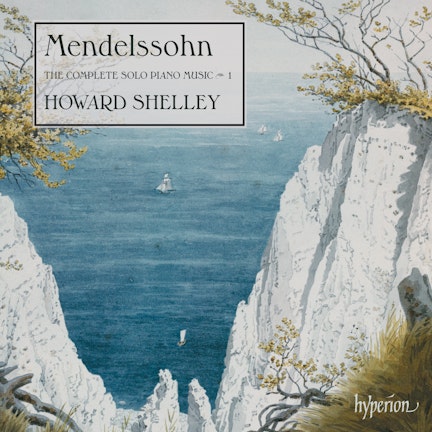
Mendelssohn: Songs Without Words, Op. 19b; Pieces Op. 5-7 (The Complete Solo Piano Music 1)