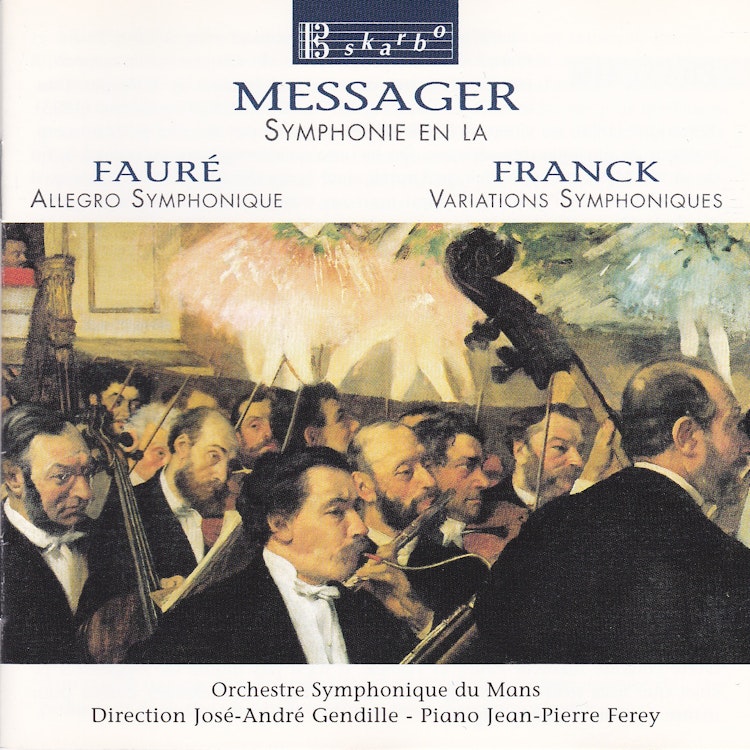
Messager: Symphonie en la - Fauré: Allegro Symphonique - Franck: Variations Symphoniques
8/1/2013, 6 Tracks, 58:45
Featuring
José-André Gendille
Jean-Pierre Ferey
Orchestre Symphonique du Mans
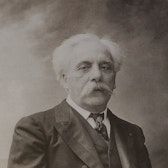
Gabriel Fauré
César Franck
André Messager
Did you know?
1/7
Compositional Technique
César Franck's Symphony in D minor, his only symphony, is noted for its original construction, which he described as a "classical symphony" that unites movements and gathers themes in the finale.
Composition History
In 1871, César Franck co-founded the Société Nationale de Musique with Saint-Saëns and others, which encouraged him to compose his oratorio, Redemption.
Composer's Artistic Vision
César Franck described the poetic meaning of the symphonic intermezzo from Redemption as "the joy of the world, transformed and blossoming thanks to the words of Christ."
Composer Biography
Vincent d'Indy, a student, admirer, and biographer of César Franck, divides Franck's work into three periods.
Recording & Production
This album was recorded at the "Dormoir des Moines de l'Abbaye de l'Epau" with Paul Cottrel as sound engineer and Jean Pierre Ferey as artistic director.
Historical Context
César Franck's Symphony in D minor is considered a starting point for a new tradition of the symphony in France, which later developed with composers like Chausson, d'Indy, and Magnard.
Critical Reception
César Franck's oratorio, Redemption, premiered in April 1873, was initially deemed too difficult by musicians, poorly interpreted, and considered boring by the public.
You might also enjoy...
Arcadia: Visions Of Pastoral Bliss
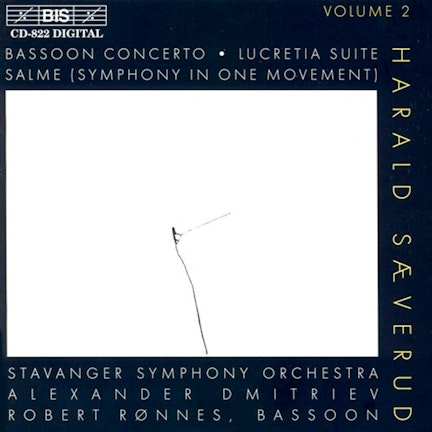
Saeverud: Bassoon Concerto
Rimsky-Korsakov: Maid of Pskov (The) / Fairy Tale
Tchaikovsky: Piano Concerto No. 1 & Suite No. 4 "Mozartiana"
Falla : Noches en los jardines de España & Albéniz : Iberia [Extracts]