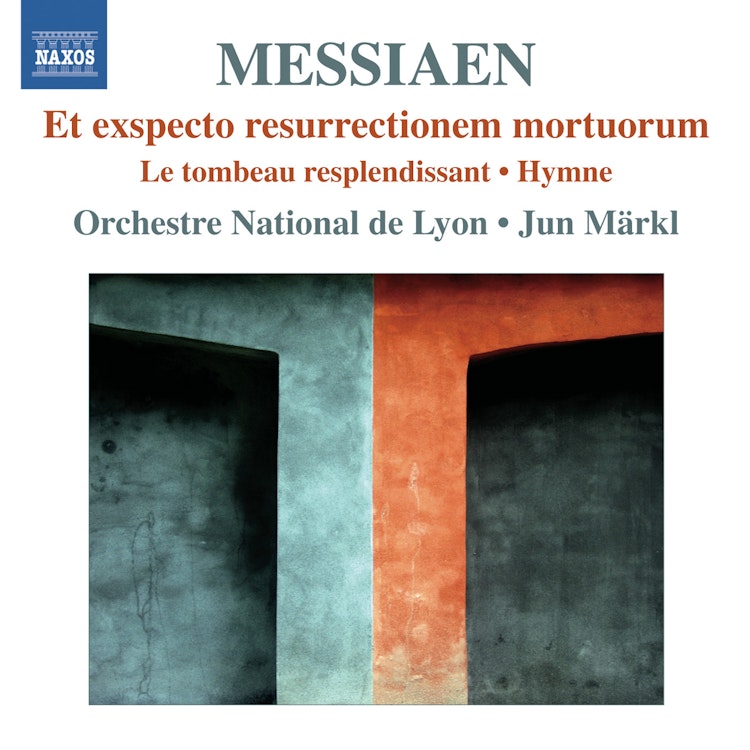
Messiaen's Et exspecto resurrectionem mortuorum incorporates Indian rhythms, such as simhavikrama ('the power of the lion') and vijaya ('victory'), into its symbolic description of Christ's Resurrection.
Composer Biography
Messiaen was held as a prisoner of war during World War II, where he composed and premiered one of his most famous works, the Quatuor pour le fin de temps (Quartet for the End of Time), with fellow prisoners.
Composition History
Messiaen's early orchestral work Hymne was reconstructed entirely from memory in 1946 after the only copy of the score and parts was lost in transit during World War II.
Performer Biography
Jun Märkl, the conductor on this album, studied with renowned figures like Sergiu Celibidache, Gustav Meier, Leonard Bernstein, and Seiji Ozawa.
Composer's Artistic Vision
Messiaen was deeply fascinated by birdsong since his teenage years, meticulously notating different birdsongs from around the world and incorporating them into his music.
Composition History
The work Et exspecto resurrectionem mortuorum was commissioned by André Malraux, the French Minister of Cultural Affairs, to commemorate the dead of the two World Wars.
Composer Biography
Olivier Messiaen, the composer, was a child prodigy, accepted into the Paris Conservatoire at age eleven, where he studied piano, composition, and organ.
You might also enjoy...
Pierné: Images, Paysages franciscains & Les cathédrales
D'Indy: Orchestral Works, Vol. 3
Ohana, M.: Livre Des Prodiges / Synaxis
Massenet: Thaïs: Méditation
Saint-Saëns: Carnival of the Animals, R. 125: VII. Aquarium