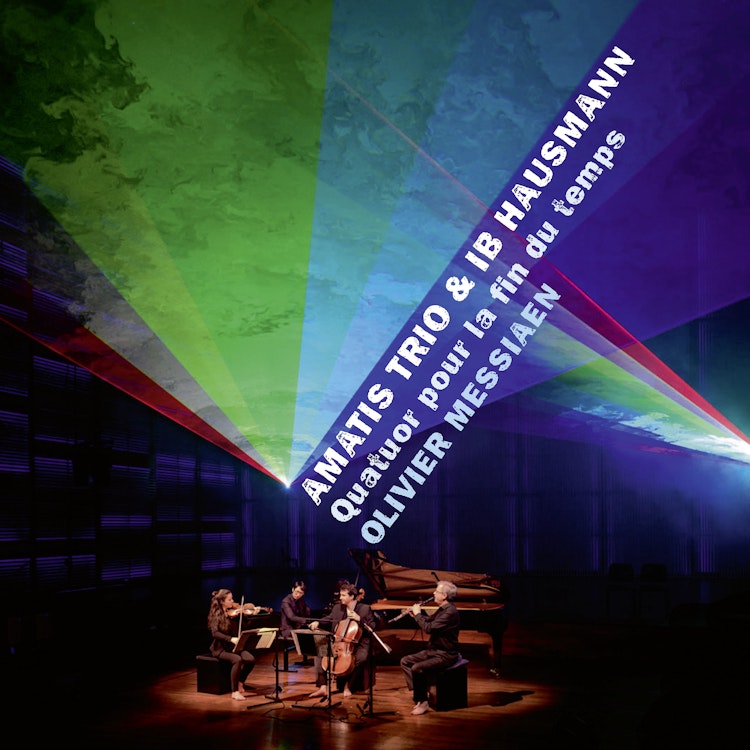
The Amatis Trio, founded in Amsterdam in 2014, has performed in 34 countries and won numerous awards, including the Kersjesprijs, the most outstanding chamber music prize in the Netherlands.
Interpretation
The performers on this recording feel they must 'break boundaries' to do justice to Messiaen's Quatuor, which demands both precise adherence to his clear notation and improvisational freedom.
Composer's Artistic Vision
Messiaen's music is deeply rooted in spirituality and biblical texts, inspired by the Revelation of St. John, and aims to evoke a sense of eternity and the divine.
Composition History
Olivier Messiaen composed his Quatuor pour la fin du temps (Quartet for the End of Time) in a German prisoner-of-war camp, Stalag VIII-A, during World War II.
Historical Context
The German camp commander, Franzpeter Goebels, secretly detested the Nazi regime and provided Messiaen with a piano and music paper, enabling him to compose the Quatuor.
Notable Performances
The Quatuor pour la fin du temps premiered on January 15, 1941, in the Stalag VIII-A prisoner camp, performed by Messiaen and three fellow prisoners on broken instruments for an audience of 400.
Compositional Technique
Messiaen was an ornithologist and rhythmist, meticulously transcribing birdsong into his scores and developing unique compositional techniques like 'modes' for scales and chords and 'non-retrogradable rhythms'.
You might also enjoy...
Messiaen: Quatuor pour la fin du temps
Viotti: Piano Trios, Op. 15
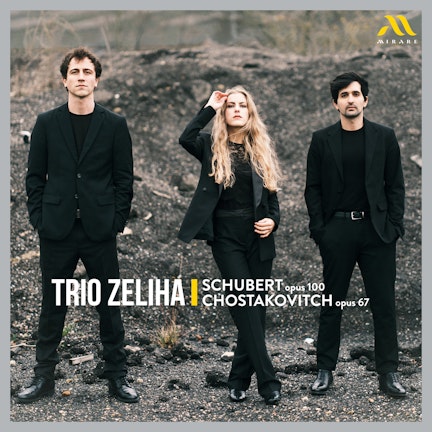
Schubert: Op. 100 - Chostakovitch: Op. 67
Beethoven - Dvorak
Brahms: Piano Trios Nos. 1 & 3
Mendelssohn: Piano Trio in C Minor - Smetana: Piano Trio in G Minor