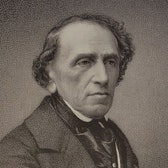
Meyerbeer completed his rehearsal score of L'Africaine in November 1863 but died a few weeks into rehearsals, preventing him from finalizing the work.
Critical Reception
L'Africaine became Meyerbeer's most frequently performed opera in the 20th century due to its soloist-oriented conception, despite a general decline in his overall popularity.
Composition History
François-Joseph Fétis, a Belgian musicologist and composer, prepared a performing version of the opera from Meyerbeer's extensive score material after the composer's death, retaining the title L'Africaine.
Composition History
Giacomo Meyerbeer, the composer, began work on L'Africaine but shelved it in 1838 after the chosen lead singer, Marie-Cornélie Falcon, lost her voice.
Recording & Production
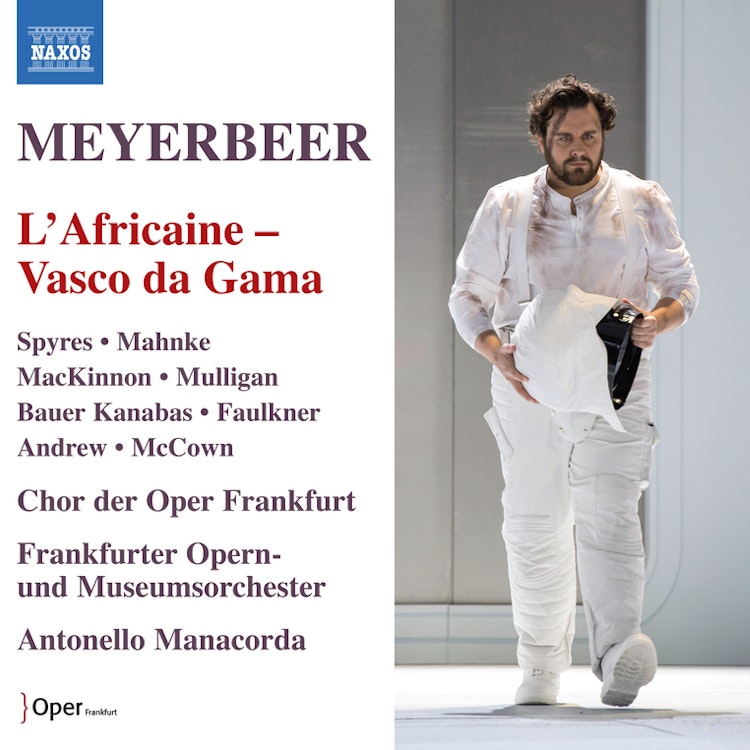
This recording is based on the critical edition of the full score of Vasco da Gama from 2018 by Jürgen Selk, reflecting Meyerbeer's original intentions.
Compositional Technique
The opera L'Africaine features a saxophone in the Grand Air (Act IV, No. 15), an instrument Meyerbeer had already planned to use in his earlier opera Le Prophète.
Composition History
The opera was originally titled Vasco da Gama after its setting was relocated from Central Africa to India during revisions between 1851 and 1853.