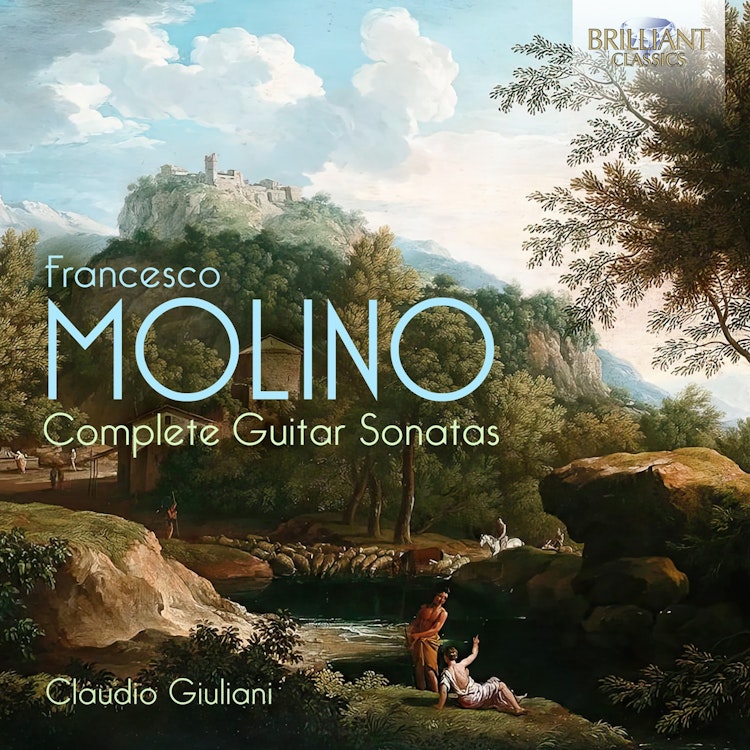
Francesco Molino, born in 1768, began his musical career at age 15 as an oboist in Piedmont's regimental band and also performed as a violist.
Compositional Technique
Molino's sonatas employ three main structural types, often featuring a romance or an allegro in sonata form, and frequently concluding with a rondo.
Cultural Impact
Molino's 'Nouvelle Méthode' for guitar was highly successful, with about 400 subscribers across Europe and even a Spanish version reaching Mexico and Havana.
Composer's Artistic Vision
Molino's sonatas demonstrate his mastery of composition, freedom in musical form, refined harmony, and deep understanding of the instrument, creating a highly personal stylistic language.
Composer Biography
Molino moved to Paris in 1818, where he focused on composing and publishing works almost exclusively for the guitar, both solo and in chamber ensembles.
Composition History
The sonatas on this album were explicitly intended by Molino for solo guitar performance and contribute significantly to the 19th-century guitar sonata repertoire.
Instruments
Molino designed his own guitar, described in his 'Grande Méthode Complète Op.33', featuring a convex soundboard for greater volume and a smaller, rounded neck to facilitate barre chords.
You might also enjoy...
MATIEGKA, Solo guitar music, Agustin Maruri
Weinan: Love At Night Of Tulips
The Seasons
Dyens: Lettre Encore
Gangi 22 Studies for Guitar
… À deux
Ghiribizzi M.S.43 Intégrale
The Seasons
Handel: Suite in D Minor, HWV 437: III. Sarabande (Transcr. for Guitar)
Tárrega: Recuerdos de la Alhambra
Castelnuovo-tedesco: The Well Tempered Guitars op. 199 Vol. 1
Music for Five Guitars
J.S. Bach: Sleepers, Awake, BWV 645 (Transcr. for Guitar)