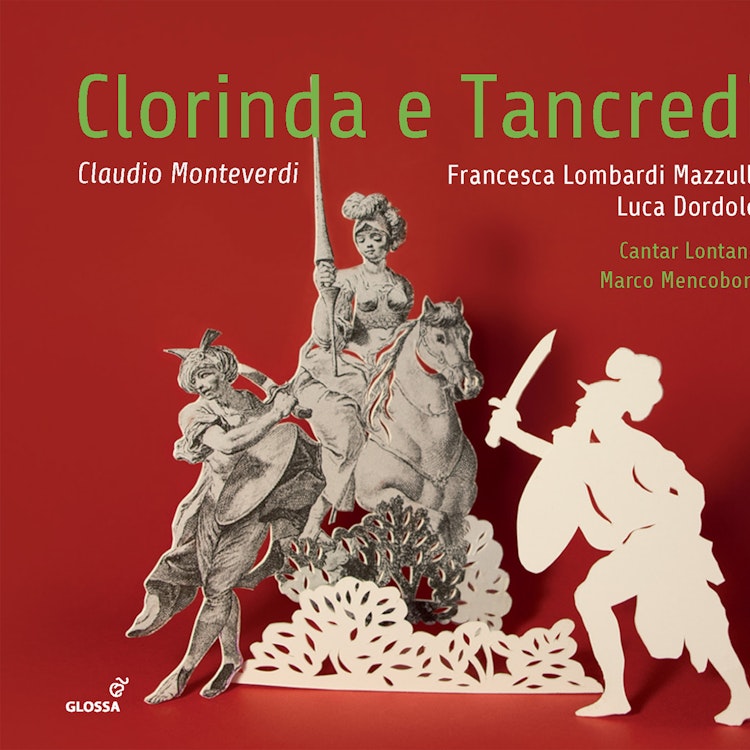
Monteverdi's 'Combattimento di Tancredi e Clorinda' uses the 'stile concitato' (agitated style), which includes the tremolo, to express anger and battle.
Compositional Technique
In the 'Lamento della ninfa', Monteverdi uses an ostinato formed by a descending tetrachord, a technique also known as ground bass in English music, as used by Purcell.
Composition History
Monteverdi's 'Combattimento di Tancredi e Clorinda' was commissioned by a Venetian nobleman and was intended to be a 'song of a kind which has never before been seen nor heard'.
Composer's Artistic Vision
The album's pieces reflect the shift in music where words gained primacy over music, making the listener the 'hero' of the work by identifying with the soloist's voice.
Recording & Production
The recording was made in Pesaro, Italy, at the Pieve Vecchia di Ginestreto, in November 2016.
Composer's Artistic Vision
Claudio Monteverdi's 'nuova musica' was seen as a threat to the Renaissance ideal of harmony, as it used dissonance to express and provoke emotion.
Historical Context
Giovanni Maria Artusi, a composer and canon, criticized Monteverdi's 'nuova musica' for being 'full of things contrary to beauty in art, unbearable to the ear which they wound rather than enchant'.
You might also enjoy...
Monteverdi: Il Combatimento Di Tancredi I Clorinda
Monteverdi: Complete Duets
O felice morire'
Lagrime d'amante
Monteverdi: Madrigali sui testo del Tasso dal I, II, III e IV Libro dei Madrigali
Monteverdi, C.: Madrigals, Book 5 (Il Quinto Libro De' Madrigali, 1605) (La Venexiana)
Monteverdi: Quarto Libro di Madrigali
Monteverdi: Madrigals, Book 8
Monteverdi: Il terzo libro de madrigali
Prima le parole: Partitura de' madrigali a cinque voci
Monteverdi: Madrigali - Cremona Vol. 1
Monteverdi, C.: Madrigals, Book 6 (La Venexiana)
Monteverdi, C.: Madrigals, Book 8 (La Venexiana)
Monteverdi : Il combattimento, Il ballo delle ingrate & Madrigals