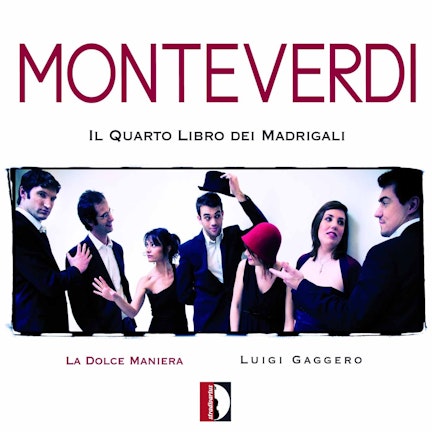
The five-voice version of Lamento d'Arianna and the Sestina (Lagrime d'amante al sepolcro dell'amata) are central to this publication and date back to 1610.
Composer Biography
At the time of this publication, Monteverdi had found recognition and resolved his financial difficulties in Venice, a city artistically oriented towards a new world.
Compositional Technique
The Sixth Book of Madrigals features a basso continuo for all compositions, even those that could have been performed without it, marking a new development.
Composition History
Unlike his previous works, Monteverdi's Sixth Book of Madrigals has no dedication to a patron, suggesting an act of self-awareness by the composer.
Composition History
Monteverdi's Sixth Book of Madrigals was published in 1614, shortly after he was appointed Maestro di Cappella of the Most Serene Republic of Venice.
Composition History
Most of the music in this collection was likely composed during Monteverdi's final years in Mantua or the year he spent in Cremona, rather than after his Venetian appointment.
Compositional Technique
The madrigals in this collection are divided into two stylistic types: traditional polyphonic madrigals and 'concertati' madrigals, which feature solo parts alternating with five-voice episodes, creating small musical theatre scenes.
You might also enjoy...
Per voi lasso
Gesualdo: Madrigals, Books 5 & 6
Gesualdo: Madrigali, Libri primo & secondo
Gesualdo: O dolce mio tesoro. Madrigali a cinque voci, Libro sesto (1611)
Luca Marenzio: Madrigali á 5 voci, Libro 9 (Excerpts)
Gesualdo: Dolcissima mia vita. Madrigali a cinque voci, Libro quinto (1611)