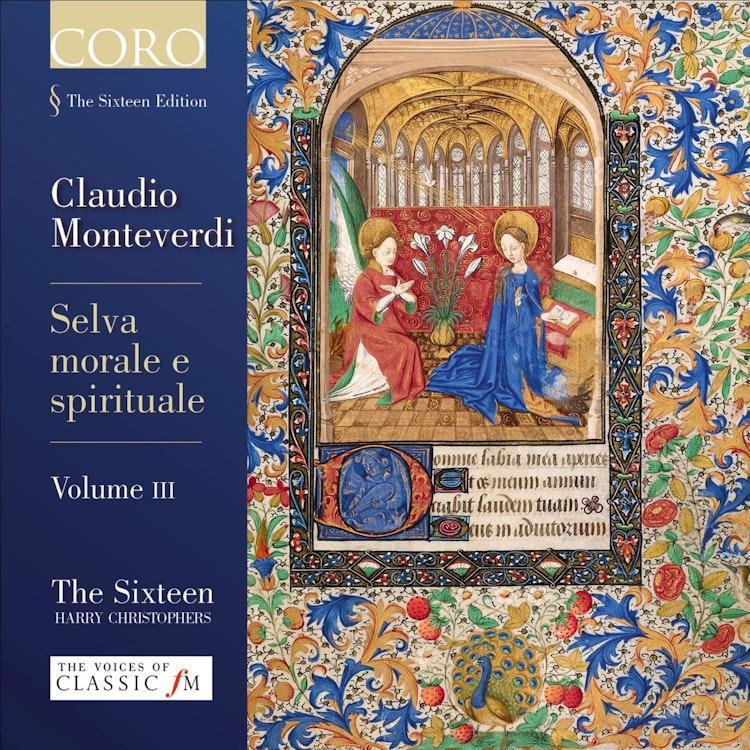
Much of the music in Monteverdi's "Selva morale" could have been used for important feast days in the church calendar that also marked significant events in Venetian history.
Interpretation
The performers on this album follow Monteverdi's dictum "recitar cantando" (speak through singing), which allows for expressive freedom and intuitive time relationships, similar to an actor reciting Shakespeare.
Historical Context
St. Mark's in Venice was allowed to retain its own special liturgy, including variant texts and services like the "Cinque Laudate" vespers, unlike most Catholic churches that adopted the new standardized Roman missal.
Recording & Production
This recording was made "in the round," with the harpsichord placed on top of the chamber organ, and other instruments and choir arranged for eye contact, facilitating subtle musical interplay.
Compositional Technique
Monteverdi's "Selva morale e spirituale" is diverse, featuring works from solo songs to thrilling eight-part vocal pieces with added strings, all characterized by luscious harmonies.
Composer Biography
Claudio Monteverdi spent the last 30 years of his life as choirmaster of St. Mark's in Venice, which was the chapel of the doge and a center of ceremonial and liturgical life.
Composition History
Claudio Monteverdi, the composer, published "Selva morale e spirituale" in the final years of his life, making it his largest and last collection of sacred music.
You might also enjoy...
D'India: Le musiche da cantar solo, Libro V
Lambert: Airs de cour
D'India, S.: Madrigals, Book 1 (La Venexiana)
The Selva morale e spirituale Collection
Monteverdi: Selva morale e spirituale Volume II
De Lalande: 3 Leçons de ténèbres
Couperin: Magnificat / Lecons De Tenebres
Couperin & Gesualdo
Lecons de Tenebres
Duetti da camera
Strozzi: A Portrait in Five Acts & Duets for Two Sopranos