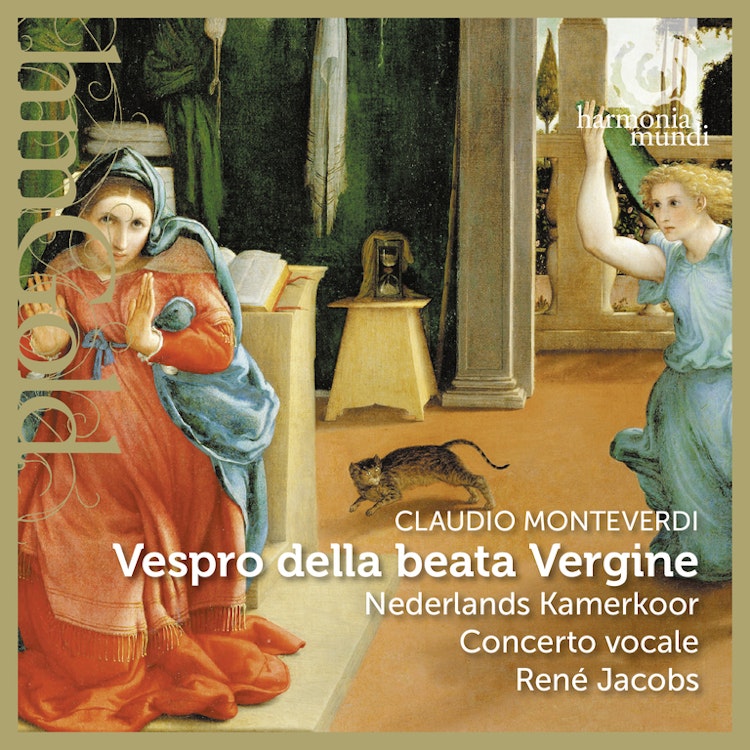
Claudio Monteverdi's music, both secular and sacred, reflects a profound shift in mentality at the end of the Renaissance, moving from a symbolic view of the universe to an exploration of earthly reality and human emotions.
Composer's Artistic Vision
Monteverdi's 'gentle revolution' in the Vespers involved renewing traditional compositional techniques, blending secular and liturgical forms, and intensifying the expressive power of sacred texts through all available musical means.
Interpretation
The score of the Vespers, despite its precision for the era, presents several 'insoluble enigmas' for modern musicologists and performers, such as the exact vocal distribution and the implications of 'chiavette' clefs for transposition.
Composition History
The publication of Monteverdi's 1610 collection, which includes the Vespers, was driven by personal and possibly political interests, as he sought financial stability and a new position by dedicating it to Pope Paul V.
Compositional Technique
Monteverdi incorporated modern secular forms into the sacred Vespers, such as the opening 'Deus ad adjuvandum' which parodies the Toccata from his first opera, L'Orfeo.
Compositional Technique
The Vespro della Beata Vergine showcases Monteverdi's ability to fuse the 'prima prattica' (old style of learned contrapuntal polyphony) and 'seconda prattica' (new style focused on expressing passions).
Composer Biography
Monteverdi was an exceptionally precocious genius, publishing his first works, the Sacrae Cantiunculae, at just fifteen years old in 1582.
You might also enjoy...
Monteverdi: Messa a quattro voci et salmi of 1650 Volume I
Monteverdi:Vespro Della Beata Vergine
Monteverdi: Vespro Della Beata Virgine
Monteverdi: Missa In Illo Tempore / Vespro Della Beata Vergine / Magnificat (Ii) A 6 Voci
Claudio Monteverdi: Vespro Della Beata Vergine
Monteverdi: 1610 Vespers
Monteverdi: Vespro della Beata Vergine
Monteverdi: Vespers of the Blessed Virgin
Monteverdi: Vespers of 1610, SV 206
Monteverdi: Vespro della beata Vergine
Claudio Monteverdi: Vesperae della Beatae Maria Virginis 1610
Monteverdi, C.: Madrigals, Book 2 (Il Secondo Libro De' Madrigali, 1590) (La Venexiana)