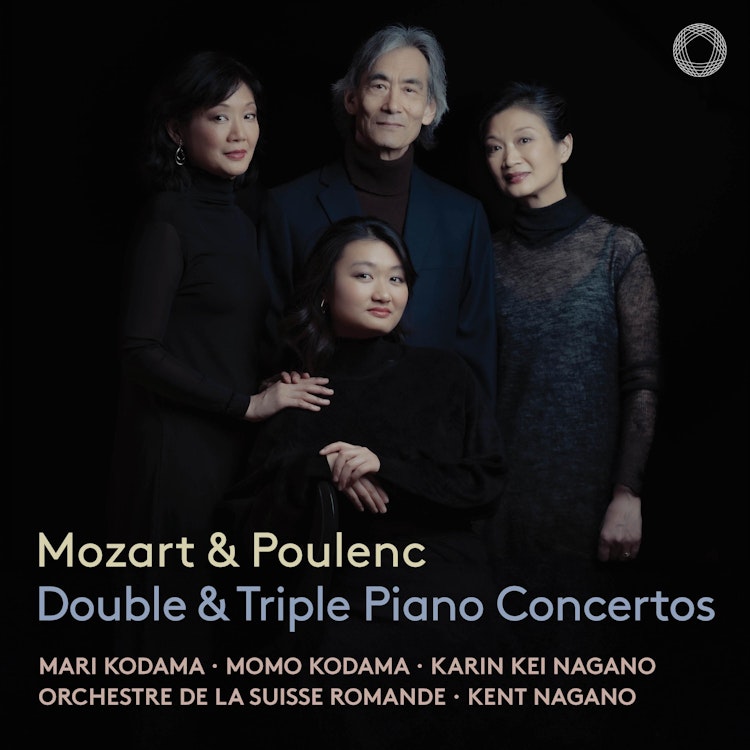
The idea for this album, featuring family members performing Mozart's Double and Triple Piano Concertos, came from the long-time producer Job Maarse, who was inspired by a similar recording by the Casadesus family.
Performer Biography
Mari Kodama's daughter, Karin Kei Nagano, approaches music vocally and melodically, having grown up in a world dominated by symphony and opera, which complements the playing of her mother and aunt.
Composer's Artistic Vision
Francis Poulenc, the composer of the Concerto for 2 Pianos and Orchestra, considered Mozart his musical god and paid homage to him in his own concertos.
Composer Biography
Mozart composed K. 365, the Concerto in E-Flat Major for two pianos, to be played with his sister Nannerl.
Composition History
Mozart's Piano Concerto No. 7 for 3 Pianos in F Major, K. 242, nicknamed 'Lodron Concerto', was a commissioned work for the music-loving Countess Antonia Lodron and her two daughters.
Compositional Technique
Poulenc's Concerto for 2 Pianos and Orchestra blends diverse elements, including French vaudeville, jazz à la Gershwin, and Balinese sounds, which he encountered at the 1931 Paris World Exhibition.
Compositional Technique
The light-hearted Rondo finale of Mozart's K. 365 concerto uses the main theme of an Augsburg joke song called 'The Cat Won't Stop Catching The Mouse'.
You might also enjoy...
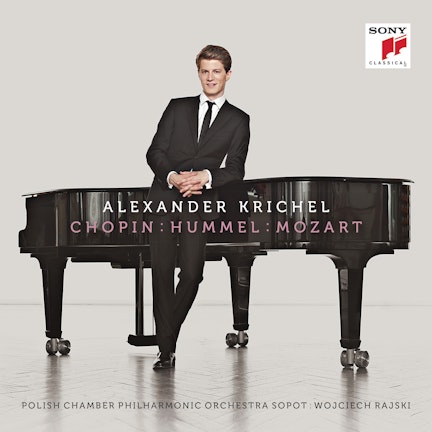
Chopin - Hummel - Mozart
Mozart: Piano Concertos 18 & 22
Mozart: Piano Concertos 9 & 25; Rondo in A K386
Icon: Edwin Fischer
Mozart, Haydn: Piano Concertos
Constantine Orbelian: Shostakovich, Mozart, Bach Piano Concertos
Mozart: Piano Concertos 9 & 12
Mozart: Klavierkonzerte No. 22 & 23
Mozart Piano Concertos, Vol. 3
Mozart: Piano Concertos Nos. 11 and 22
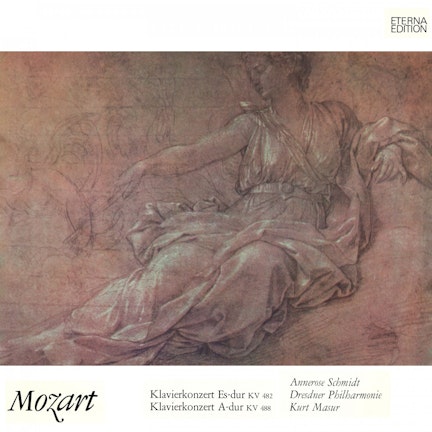
MOZART, W.A.: Piano Concertos Nos. 22 and 23 (Schmidt, Dresden Philharmonic, Masur)