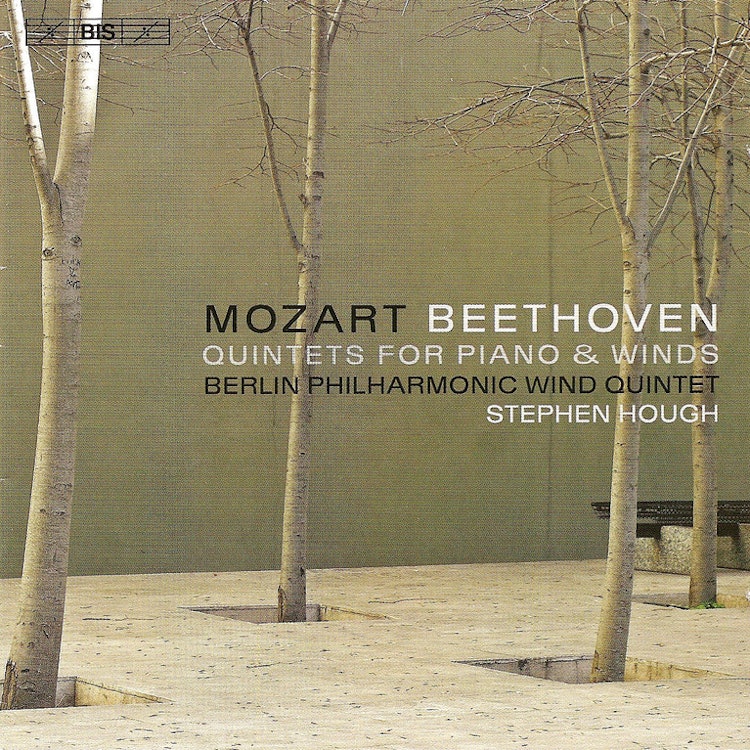
Mozart's Quintet, KV 452, features lengthy chromatic modulations in its harmony, particularly in the development sections of the first and second movements, which would have sounded new and unusual to audiences of his time.
Composer's Artistic Vision
Mozart elevated wind instruments, typically reserved for light divertimentos and open-air performances, by using them in an elaborate and refined chamber music piece as demanding as a string quartet.
Performer Biography
The Berlin Philharmonic Wind Quintet was founded in 1988 during Herbert von Karajan's era and has maintained the same membership since its inception, making it the first permanently established wind quintet in the Berlin Philharmonic Orchestra's chamber music tradition.
Composition History
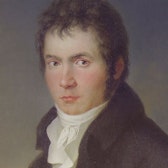
Beethoven's Quintet for piano and winds, Op. 16, was written in Berlin in 1796 during his only major concert tour as a piano virtuoso, where he also began to experience the first signs of his hearing deterioration.
Composition History
Mozart considered his Quintet, KV 452, to be the best thing he had ever written, expressing this in a letter to his father after its successful premiere in 1784.
Historical Context
The standard wind quintet instrumentation was not established until 1813-14 by Bohemian composer Antonín Rejcha, whose 25 quintets are considered a wind counterpart to the popular string quartet music of the era.
Notable Performances
During the premiere of Beethoven's Quintet, Op. 16, he improvised extensively on the rondo theme, much to the indignation of the accompanying wind players, especially the famous oboist Friedrich Ramm.
You might also enjoy...
Visée: Lute, Guitar, & Theorbo
Cornet Music - Merula, T. / Rore, C. / Gabrieli, A. / Frescobaldi, G.A. / Palestrina, G.P. / Crecquillon, T.