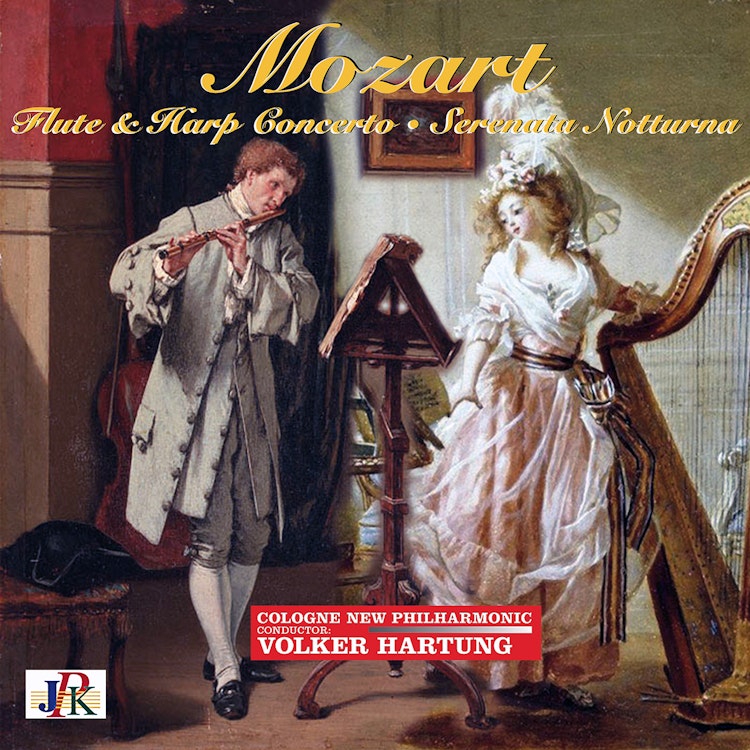
Mozart: Concerto for Flute & Harp, Don Giovanni Overture, and Serenade No. 6
6/17/2016, 7 Tracks, 47:40
Featuring
Volker Hartung
Andreas Haas
Johanna Reithmayer
Junge Philharmonie Köln
Wolfgang Amadeus Mozart
Did you know?
1/7
Historical Context
Eighteenth-century serenades in Vienna were elaborate night music performances by quartets, quintets, or even full orchestras, often played outdoors for festive occasions.
Performer Biography
The Junge Philharmonie Köln (Cologne New Philharmonic Orchestra) is a platform for highly gifted young graduates and competition winners, often serving as a 'soloist forge' for future professional musicians.
Composition History
Mozart's Concerto for Flute, Harp and Orchestra in C major, KV 299, was written in Paris for the Compte de Guines, who played the flute, and his daughter Marie-Luise-Philippine, an excellent harpist.
Composer's Artistic Vision
Mozart's music for Don Giovanni, with its dark, dramatic, and passionate tone, challenges the legend of him as a cheerful, playful 'darling of the gods'.
Compositional Technique
Don Giovanni, though sometimes classified as comic, blends comedy, melodrama, and supernatural elements, and its overture begins unusually in a minor key (D minor) for an opera buffa.
Compositional Technique
The Flute and Harp Concerto features the low C on the flute, a technical innovation of the time, and allows the solo harp to be prominent in the bass register by having solo passages accompanied only by violins and violas.
Composition History
Mozart's opera Don Giovanni was commissioned after his successful trip to Prague in early 1787, possibly due to the city's long history with Don Juan operas.