The Cassation K63 marks the definitive disappearance of the constant and wearying use of tremolos from Mozart's compositional language, which had previously characterized many of his orchestral pieces.
Recording & Production
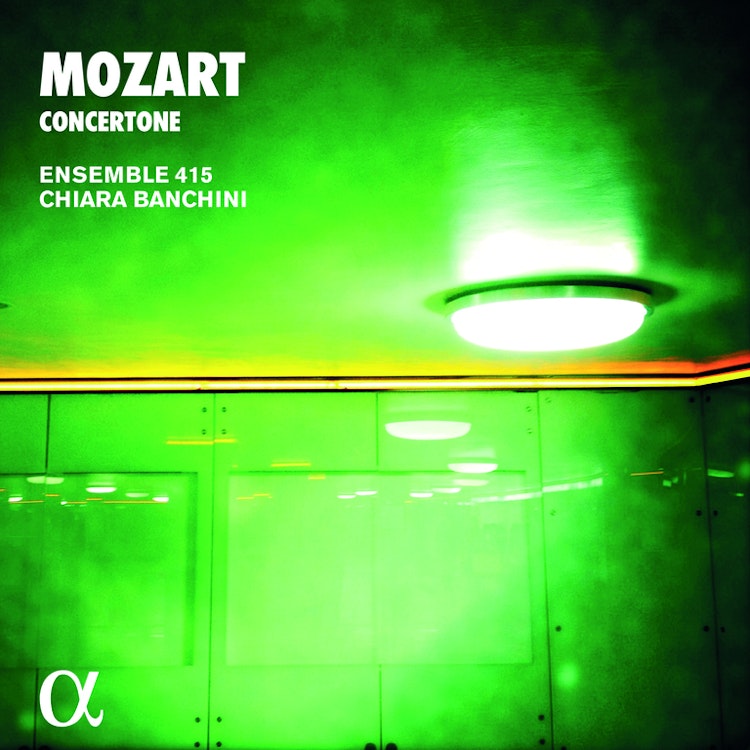
This album was recorded from July 24 to 28, 2005, at the Volkshaus in Basel, Switzerland.
Composition History
The Cassation K63 was written in August 1767 as a Finalmusik, an instrumental piece to celebrate the end of the academic year at one of Salzburg's university faculties.
Historical Context
The term 'cassation' likely comes from the Salzburg students' Latin 'gassatim' (from German 'Gasse', meaning street), suggesting its function as 'street music' or 'music on the move'.
Compositional Technique
Cassations were typically outdoor music, composed of a series of movements with indeterminate numbers and structures, arranged as a suite, and framed by a march at the beginning and end.
Composition History
The Serenata notturna K239 is another example of occasional music, but its specific function, commissioner, and performance circumstances are unknown.
Critical Reception
The Cassation K63, written for the Faculty of Logic, is considered by many to be a small masterpiece and shows the remarkable progress of the young Mozart.
You might also enjoy...
Mozart: Symphonies Nos.38 & 39
Mozart: Symphonies Nos. 34 & 40; Notturno for 4 Orchestras
Mozart: Symphonies, Vol. 3 (1769-1770)
Wolfgang Amadeus Mozart: Symphonies Nos. 21 and 23 / Johann Christian Bach: Symphony in G Minor, Op. 6, No. 6 / Grand Overtures, Op. 18 (Academy for Ancient Music Berlin)
Haydn: Symphonies - Sturm und Drang, Paris & London