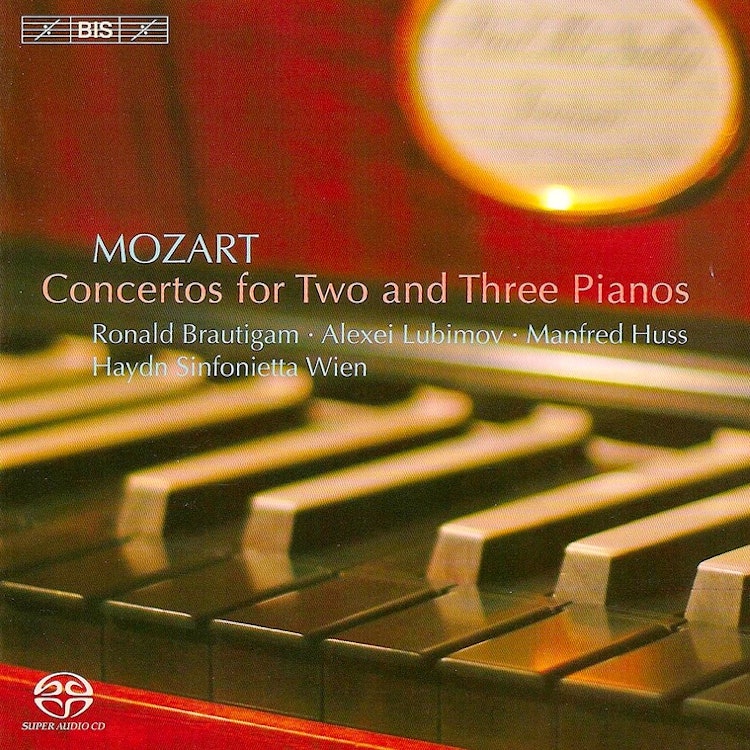
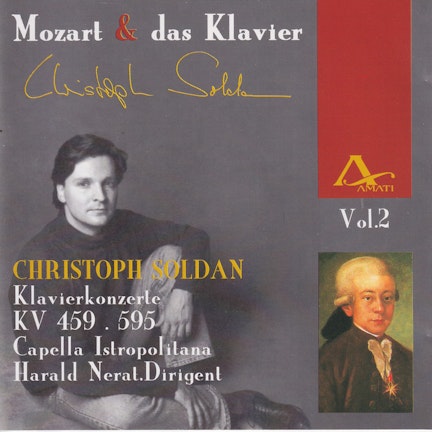
This recording aims for a historically faithful interpretation, including reduced string sections in solo passages, spontaneous ornamentation, 'classical' rubato, and solo pianos playing during tutti passages.
Composition History
Mozart's Double Concerto in E flat major, K 365, was written for himself and his sister Nannerl and is his last piano concerto from his Salzburg period.
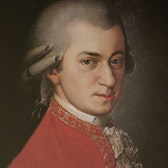
Composer Biography
Mozart was greatly influenced by Johann Andreas Stein, a leading German piano maker, and his instruments, as evidenced by a letter from Mozart in 1777.
Instruments
The fortepiano, with its wide range of sonorities, became increasingly widespread but could not produce the percussive sound of the harpsichord, leading to the decline of keyboard-led orchestras.
Compositional Technique
In the Concerto in F major, Mozart creates a 'musical joke' by arbitrarily dividing the musical line among three pianos, making it sound 'normal' to the listener while challenging the pianists.
Historical Context
The first fortepianos were created by Bartolomeo Cristofori in Florence before the end of the 17th century, who called them Arpicimbalo che fá il piano e il forte.
Composition History
The 'Lodron Concerto' for three pianos, K 242, was composed in 1776 for Countess Antonia Lodron and her daughters in Salzburg.
You might also enjoy...
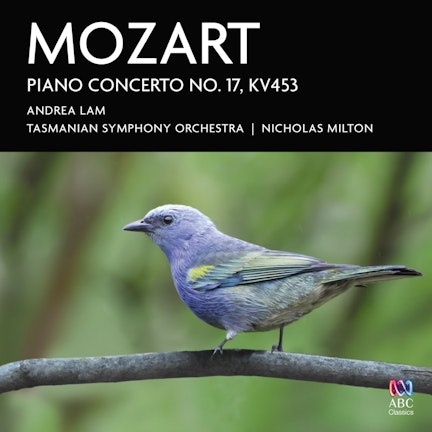
Mozart: Piano Concerto No. 17, KV453
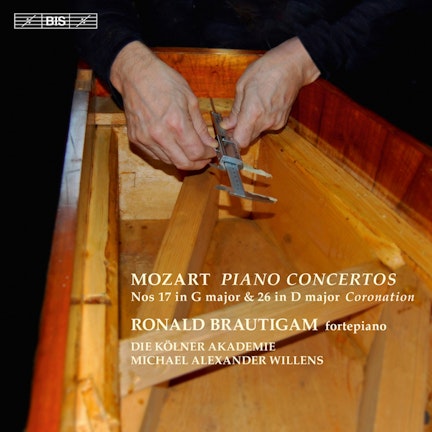
Mozart: Piano Concertos Nos. 17 in G major & 26 in D major, 'Coronation'
Mozart: 9. / 27. Klavierkonzert
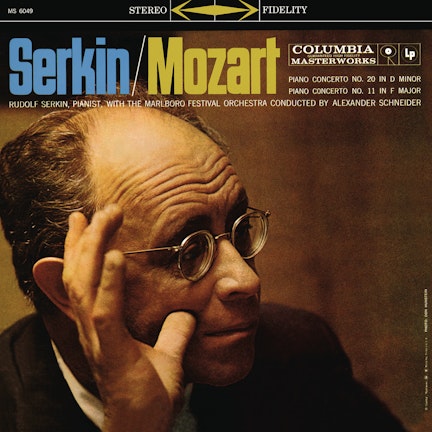
Mozart: Piano Concerto No. 20 in D Minor, K. 466 & Piano Concerto No. 11 in F Major, K. 413
Mozart: Piano Concertos Nos. 23 & 26 "Coronation"
Mozart: Piano Concertos Nos. 24 and 27
Mozart: Piano Concertos Nos. 20 & 22
Mozart: Piano Concerto No. 27 in B-Flat Major, K. 595
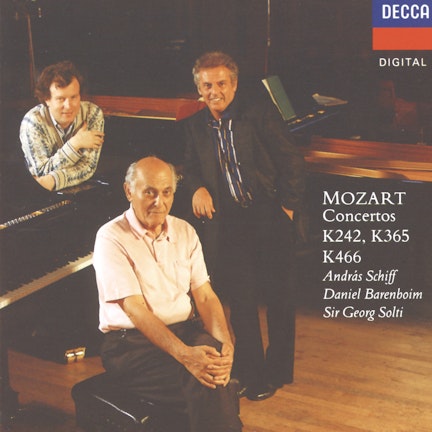
Mozart: Piano Concerto No.20; Concerto for 2 Pianos; Concerto for 3 Pianos
Leif Ove Andsnes Plays Mozart
Wolfgang Amadeus Mozart: Piano Concertos Nos. 19 & 27