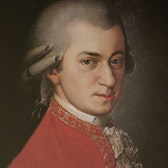
Mozart and his friend Emanuel Schikaneder, the theatre director and fellow freemason, collaborated on "The Magic Flute," with their shared interest in freemasonry providing a key to the work.
Performer Biography
Conductor Otto Klemperer was manic-depressive, which may have made the opera's extraordinary mood swings seem more real and thrilling to him.
Critical Reception
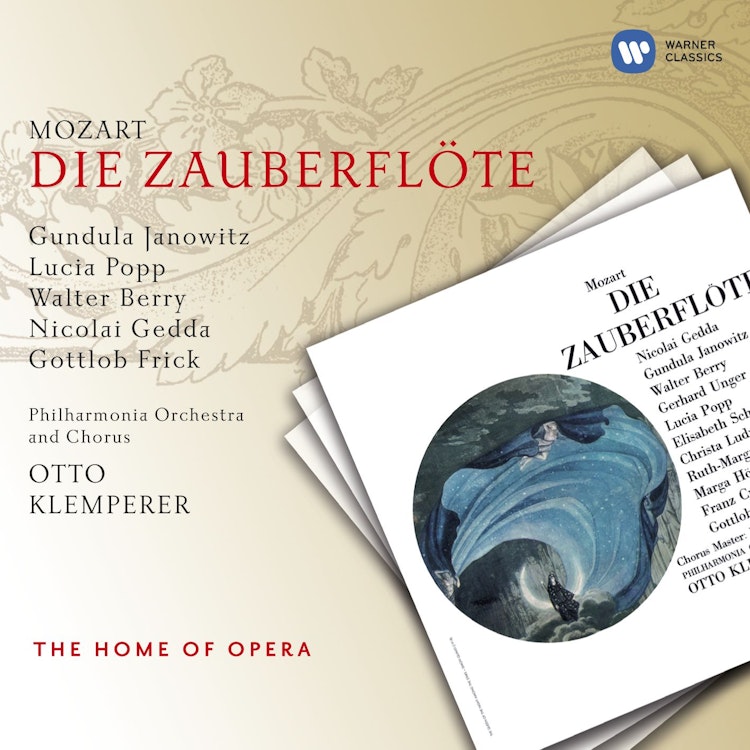
The recording of "The Magic Flute" was, and remains, a glorious achievement, showcasing Klemperer's skill in etching details and creating a noble, full-bodied sound.
Composition History
"The Magic Flute" was Mozart's last opera, premiered on September 30, 1791, when he was ill and impoverished.
Interpretation
Otto Klemperer, the conductor, refused to include the spoken dialogue in this recording of Mozart's "The Magic Flute," believing it redundant away from the stage.
Recording & Production
The producer, Walter Legge, resigned from the recording sessions of "The Magic Flute" after being denied access to Klemperer's piano rehearsals.
Composer's Artistic Vision
Bruno Walter, a conductor and Klemperer's sparring-partner, suggested that Schikaneder contributed the adventures and merriment to "The Magic Flute," while Mozart provided the solemnity and some of the fun.