The 'clockwork organ' or 'organ cylinder' for which Mozart composed several pieces, was a flute-playing musical clock popular in high society art galleries and curiosity chambers of the time.
Composition History
Mozart wrote KV 594 and KV 608 for a memorial exhibition for Austrian national hero Field Marshal Baron Gideon von Laudon, where funeral music was played hourly.
Performer Biography
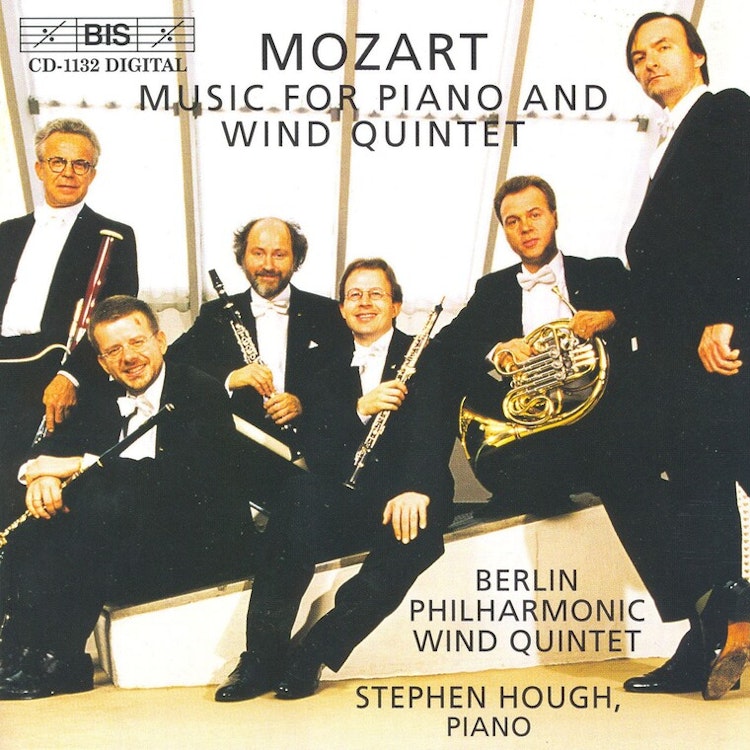
The Berlin Philharmonic Wind Quintet, founded in 1988, is the first permanently established wind quintet in the long tradition of chamber music ensembles from the Berlin Philharmonic Orchestra.
Composer Biography
Mozart considered his Quintet, KV 452, for piano and winds to be the best work he had ever written.
Composition History
The Adagio and Rondeau, KV 617, was commissioned by the blind virtuoso Marianne Kirchgäßner for a concert in Vienna in July 1791, featuring the glass harmonica.
Cultural Impact
Mozart's KV 608, an outstanding piece with fine contrapuntal passages, quickly became well-known, with Ludwig van Beethoven making a copy for study and influencing Schubert's F minor Fantasy.
Composition History
Mozart's three surviving works for mechanical organ were commissioned by Count Josef von Deym for his art gallery, which featured a mix of statues, reliefs, paintings, and musical automata.
You might also enjoy...
Mozart: Complete Divertimenti for Wind Ensemble
Mozart: Complete Divertimenti & Serenades for Winds
Mozart: Serenades Nos. 11 and 12 - Soderberg: The Death of Pierrot - Strauss: Serenade, Op. 7