Wolfgang Amadeus Mozart, despite being a superb organist and court organist in Salzburg, never wrote any music specifically for the organ.
Historical Context
During Mozart's time, contemporary Catholic liturgical practice in Salzburg did not allow for solo organ music, except for improvised pieces in fugal form during processions.
Compositional Technique
Mozart's 'Eine kleine Gigue' includes numerous allusions to the B-A-C-H sequence, indicating it is a homage to J.S. Bach.
Recording & Production
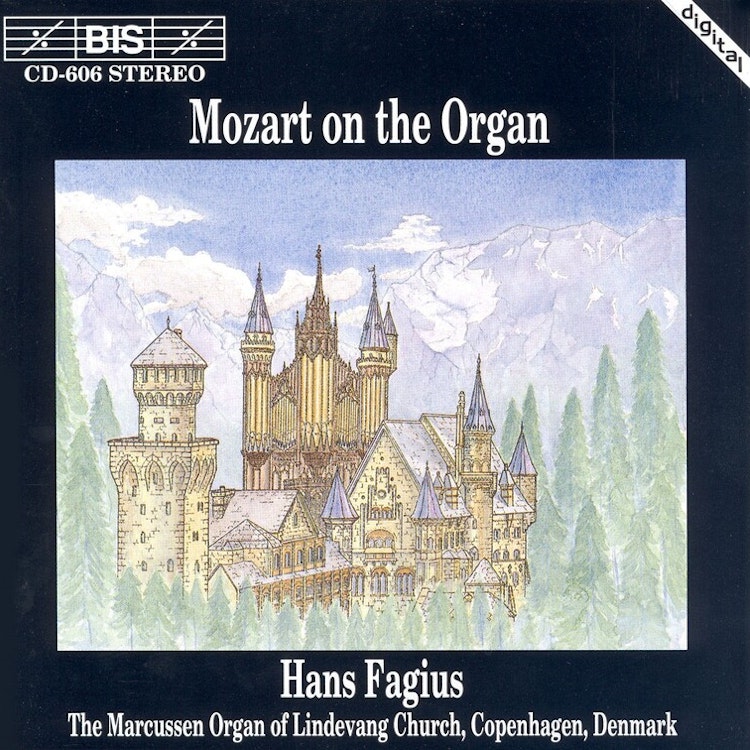
For this recording, Hans Fagius chose the newly-built Marcussen organ in the Lindevang Church in Copenhagen, built in 1990, because its modern compass and blend of South German and French organ characteristics make it ideal for Mozart's organ music.
Composition History
Many of the fugal compositions on this album were left incomplete by Mozart and were later finished by other composers, such as Abbé Maximilian Stadler and Simon Sechter, at the behest of Mozart's wife, Constanze.
Composer's Artistic Vision
Mozart's interest in counterpoint and the music of Bach and Handel grew significantly in 1782-83, influenced by the Austrian diplomat Baron Gottfried van Swieten, who hosted Sunday afternoon gatherings to play earlier music.
Instruments
Some works on this album were originally composed for mechanical, self-playing organs, often called 'Flöten-Uhr' (flute-clock), which were popular in the late 18th century and featured pipes fitted into a clock.