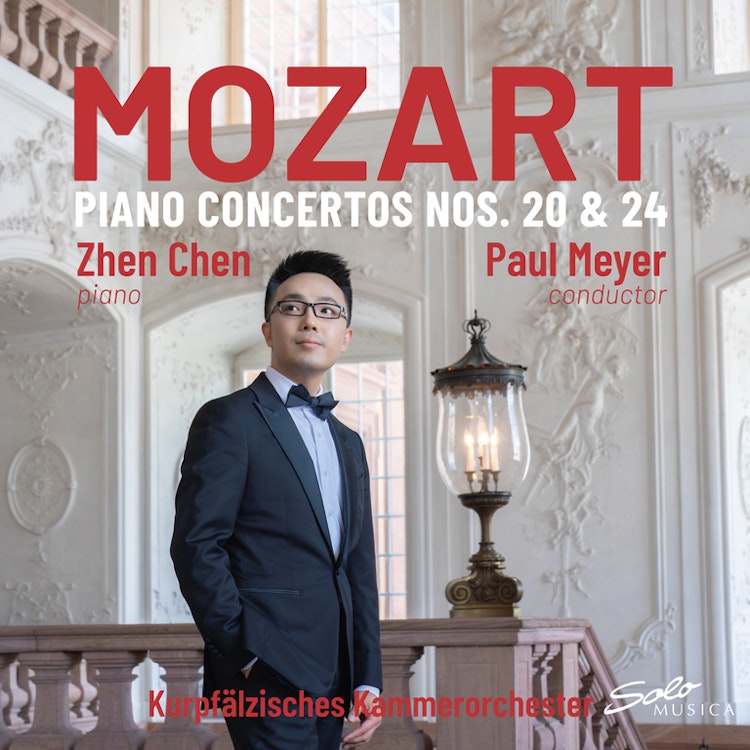
Mozart: Piano Concerto No. 20 in D Minor, K. 466 & Piano Concerto No. 24 in C Minor, K. 491
5/23/2025, 6 Tracks, 57:11
Featuring
Zhen Chen
Paul Meyer
Kurpfälzisches Kammerorchester
Wolfgang Amadeus Mozart
Did you know?
1/7
Historical Context
The Chamber Orchestra Mannheim is the direct successor to the famous Mannheim Hofkapelle, which under Prince Elector Carl Theodor (1724-1799) set new standards for orchestral culture in the 18th century.
Composer's Artistic Vision
Pianist Zhen Chen views his Mozart recordings as a complementary whole, with this album exploring the 'shadowy counterparts' to his previous album's radiant major-key concertos.
Composition History
A legendary story surrounds the premiere of Mozart's Piano Concerto No. 20, where his copyist had to write out the orchestral parts during the dress rehearsal while Mozart played from memory.
Critical Reception
Mozart's Piano Concerto No. 20 was an immediate public success and remained popular after his death, particularly with Romantic composers in the 19th century who admired its portrayal of inner conflicts.
Interpretation
For this recording, Zhen Chen chose cadenzas composed by Beethoven for Piano Concerto No. 20 and by Paul Badura-Skoda (an Austrian pianist and musicologist) for Piano Concerto No. 24, prioritizing conformity over idiosyncrasy.
Composition History
Mozart composed only two piano concertos in minor keys out of a total of 27: Piano Concerto No. 20 in D minor and Piano Concerto No. 24 in C minor.
Interpretation
Zhen Chen believes the 'darkness and depth' in Mozart's minor-key works come from the same 'morbid creative expression and horror imagination' as his comic operas like 'The Magic Flute,' not from biographical tragedy.
You might also enjoy...
Mozart: Piano Concertos Nos. 6 & 8 "Lützow"
Mozart: Piano Concertos Vol. 8
Mozart: Concertos for Piano and Orchestra Nos. 9 & 21
Mozart: Piano Concertos Nos. 20 & 22
W.A. Mozart: Piano Concertos No. 21 in C Major, K. 467 & No. 27 in B-Flat Major, K. 595