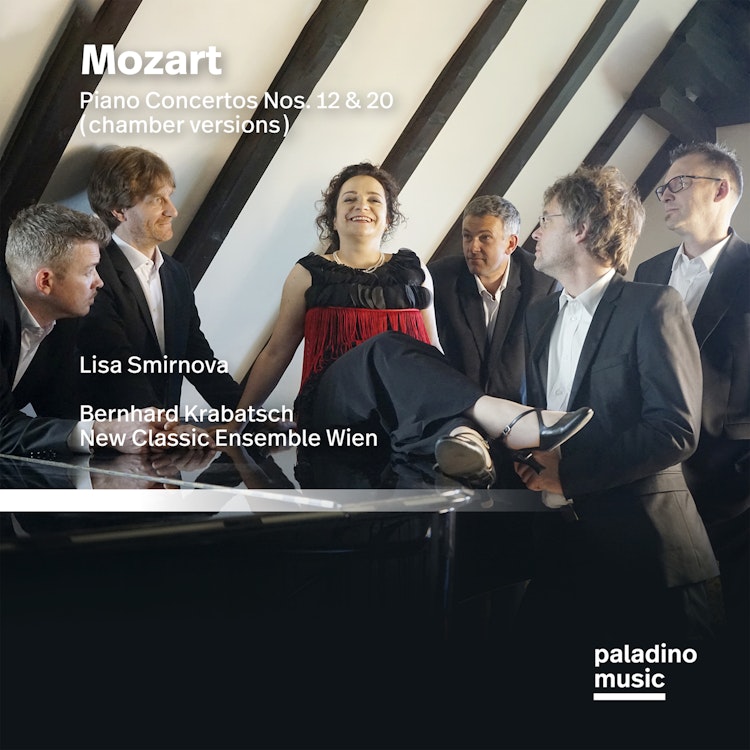
Mozart: Piano Concerto Nos. 12 & 20 (chamber versions)
4/9/2021, 7 Tracks, 1:07:10
Featuring
Lisa Smirnova
Bernhard Krabatsch
New Classic Ensemble Wien
Wolfgang Amadeus Mozart
Did you know?
1/7
Compositional Technique
Mozart's Piano Concerto in A Major, K. 414, shows the influence of Johann Christian Bach, whose piano concertos could be performed as piano quintets, and Mozart himself praised his three concertos as performable 'a Quattro' (with four strings).
Performer Biography
Lisa Smirnova, the pianist on this album, is known as a renowned Mozart specialist and has performed numerous world and national premieres of works by leading contemporary composers.
Interpretation
The New Classic Ensemble Wien uses Carl Czerny's arrangement as a basis for their recording, developing the version during rehearsals, and incorporates Ludwig van Beethoven's cadenzas for the Piano Concerto K. 466.
Composer's Artistic Vision
Wolfgang Amadeus Mozart described his piano concertos as a "middle ground between too heavy and too light," brilliant and pleasant, satisfying both connoisseurs and general audiences.
Composition History
The Rondo for Piano and Orchestra, K. 386, may have originally been intended as the final movement of Mozart's A major concerto, suggested by similarities in key, form, tempo, and motivic kinships.
Interpretation
The New Classic Ensemble Wien, founded by Lisa Smirnova, aims for a historically informed sound on a modern grand piano, striving for precision, authenticity, and space for improvisation.
Composition History
Carl Czerny, a disciple of Beethoven and later teacher of Franz Liszt, arranged Mozart's Piano Concerto in D minor, K. 466, for a smaller ensemble, making it accessible to a wider audience.
You might also enjoy...
Mozart: Concerto No. 10 for Two Pianos and Orchestra, K. 365; Concerto for Piano and Orchestra, K. 414; and Trio for Piano, Violin and Cello, K. 502
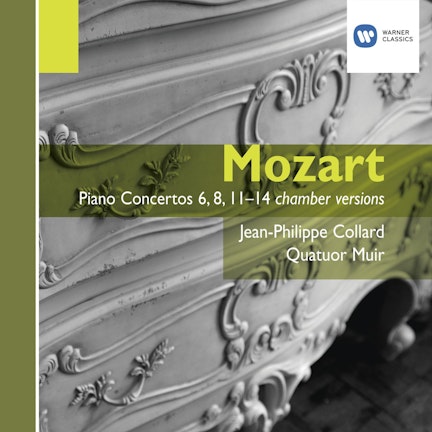
Mozart: Piano Concertos Nos.12 & 21 etc
Mozart: Piano Concertos
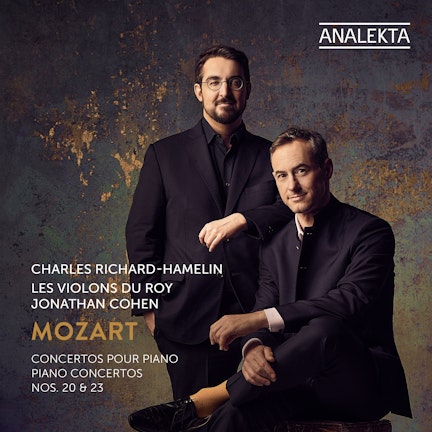
Mozart: Piano Concertos Nos. 20 & 23
Mozart: Piano Concertos Nos. 22 & 23
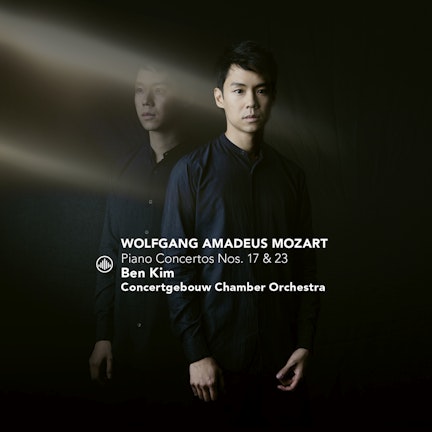
Mozart: Piano Concertos No. 17 & 23
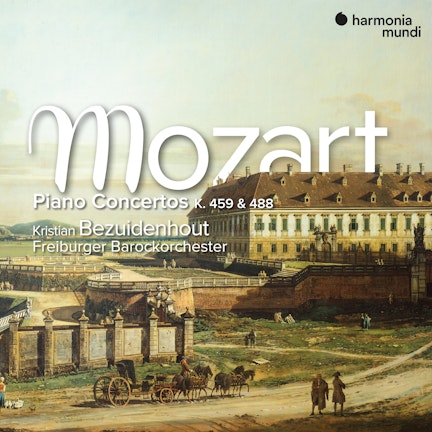
Mozart: Piano Concertos K. 459 & 488
Mozart: Piano Concertos Nos. 21 & 23
Mozart: Piano Concertos Nos. 21 & 23
Mozart: Piano Concertos Nos. 20 & 23
Mozart: Piano Concerto No. 23 in A Major, K. 488 & Piano Concerto No. 21 in C Major, K. 467