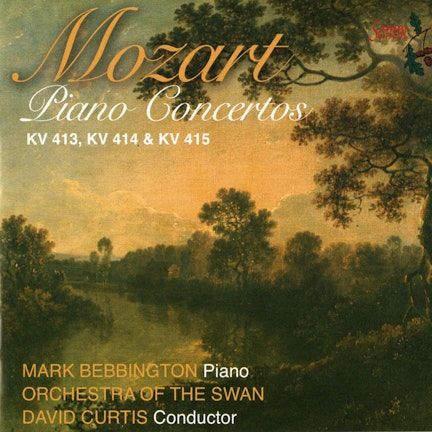
The recording uses 24-bit / 96 kHz technology, which offers a dynamic range up to 48 dB greater and 256 times the resolution of standard 16-bit recordings.
Compositional Technique
Mozart's first movements in sonata form combine the three sections of sonata form with the ritornello form inherited from Baroque composers.
Recording & Production
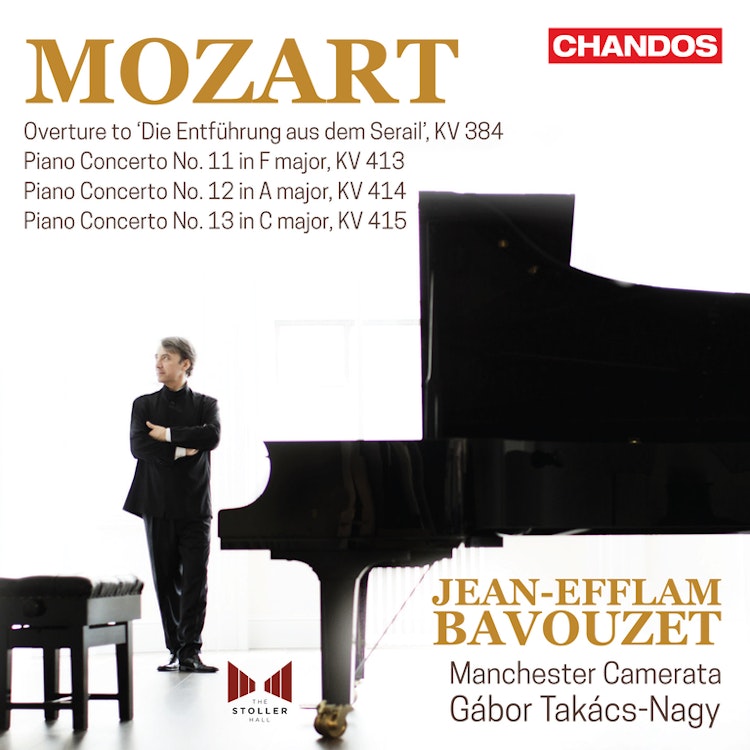
This album is part of a five-year project to perform and record every Mozart Piano Concerto in Manchester, featuring Chetham's School of Music string students.
Composition History
Mozart began a new life as a freelance artist in Vienna in 1781 after parting ways with his employer, the Prince-Archbishop of Salzburg.
Compositional Technique
A core element of Mozart's style is contrast, manifesting as opposition and reconciliation of polarities, like an 18th-century yin/yang schema.
Composition History
Mozart's early Vienna piano concertos, including those on this album, could be performed 'a quatro' (with string quartet or four-part string orchestra, omitting winds and timpani).
Composer's Artistic Vision
Mozart's music incorporates the 'new simplicity' or galant revolution, balancing melody, symmetry, and counterpoint to create a subtle and satisfying architecture.