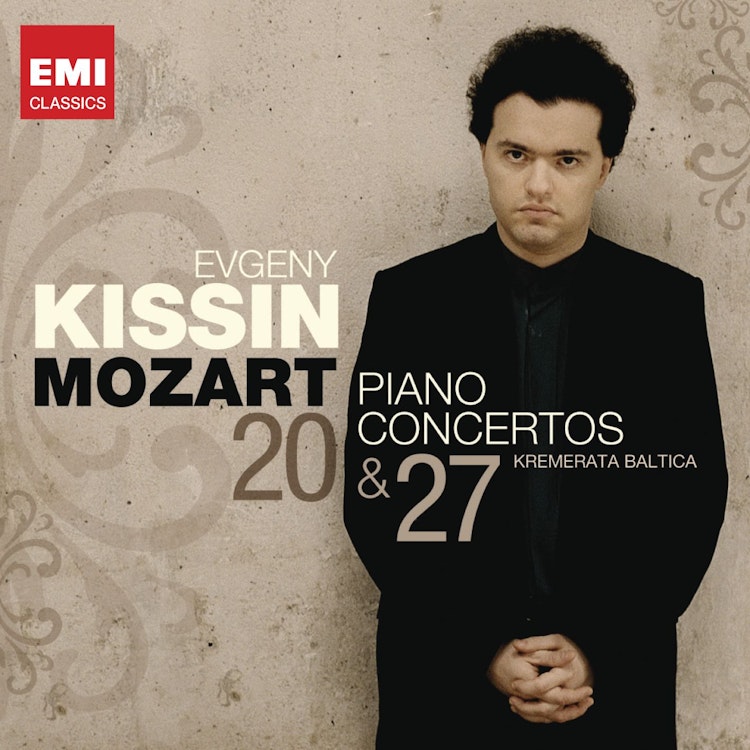
This album was recorded in June 2008 at the Herkulessaal in Munich, with Jay David Saks as producer and Arne Akselberg as recording engineer.
Compositional Technique
D minor is a relatively unusual but significant key for Mozart, which he later used for Don Giovanni's damnation scene and the Requiem.
Composer's Artistic Vision
Mozart's genius brought compositional sophistication and emotional eloquence, learned from opera, to the concerto genre.
Interpretation
Evgeny Kissin, the pianist and director on this album, uses the popular cadenza written by Beethoven for Mozart's Piano Concerto No. 20.
Composition History
The 17 piano concertos Mozart composed after moving to Vienna in 1781 represent a period of his greatest creative richness and maturity.
Compositional Technique
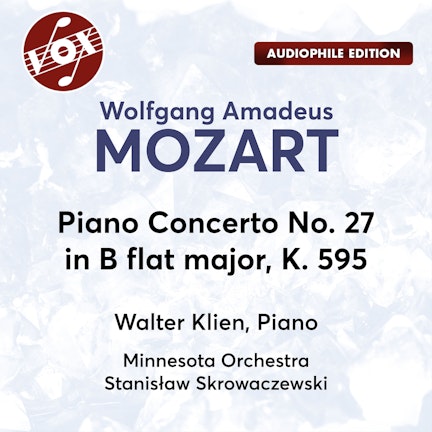
In his Piano Concerto No. 27, Mozart rejected the ebullient virtuosity of earlier concertos in favor of a more personal expression, possibly due to being tired of public display.
Composition History
Modern scholarship suggests that Mozart's Piano Concerto No. 27, his last, was drafted as early as 1788, rather than being a valedictory work from his final year.
You might also enjoy...
Mozart: Piano Concerto No. 17, KV453
Mozart: Piano Concertos Nos. 17 in G major & 26 in D major, 'Coronation'
Mozart: 9. / 27. Klavierkonzert
Mozart: Piano Concerto No. 20 in D Minor, K. 466 & Piano Concerto No. 11 in F Major, K. 413
Mozart: Piano Concertos Nos. 23 & 26 "Coronation"
Mozart: Piano Concertos Nos. 24 and 27
Mozart: Piano Concertos Nos. 20 & 22
Mozart: Piano Concerto No. 27 in B-Flat Major, K. 595
Mozart: Piano Concerto No.20; Concerto for 2 Pianos; Concerto for 3 Pianos
Leif Ove Andsnes Plays Mozart
Wolfgang Amadeus Mozart: Piano Concertos Nos. 19 & 27