The D minor key is associated with other significant works by Mozart, including the Requiem, Don Giovanni, and the C minor Mass.
Interpretation
This recording uses cadenzas by Beethoven for the D minor concerto and a cadenza by Mozart himself for the first movement of the A major concerto.
Performer Biography
Elisabeth Westenholz, the pianist on this recording, studied in Copenhagen and Vienna, and has received several awards, including the Carl Nielsen Travelling Prize.
Compositional Technique
Mozart used a very unusual key, F sharp minor, for the slow movement of the A major concerto, expressing deep melancholy in a pliant siciliano rhythm.
Composer Biography
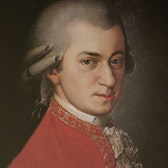
Leopold Mozart, Wolfgang Amadeus Mozart's father, traveled 300 kilometers from Salzburg to Vienna to visit his son, who had left his service with the Archbishop of Salzburg against his father's will.
Critical Reception
The D minor concerto was the most frequently performed of all piano concertos throughout the 19th century.
Composition History
The piano concerto in D minor was finished on February 10th and premiered the following evening, with Leopold Mozart noting that his son, Wolfgang Amadeus Mozart, had to supervise the copying of the score right up to the performance.
You might also enjoy...
Mozart Concertos No. 23 In A Major, K.488 And No. 24 In C Minor, K. 491