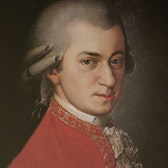
In 18th-century Vienna, Mozart's virtuosity as a pianist and his unique ability to improvise were even more highly regarded than his genius as a composer.
Historical Context
The works on this album were created during Mozart's "Golden Years" in Vienna, a period from 1782-1789.
Compositional Technique
The Fantasies in D minor/major, K.397 and C minor, K.475 are considered to be written examples of Mozart's phenomenal improvisational art.
Performer Biography
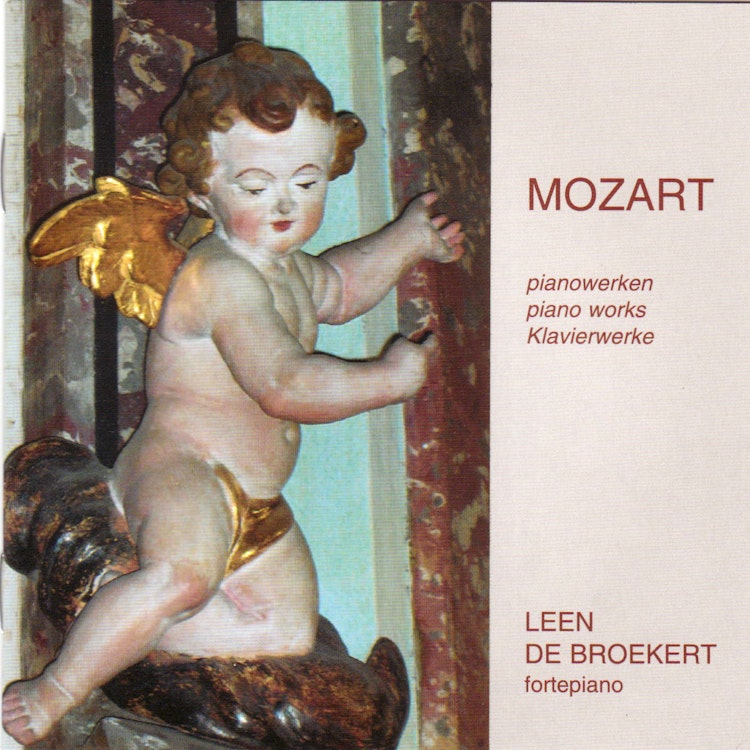
Leen de Broekert, the performer on this album, studied Piano and Organ at the Royal Academy of Music in The Hague and also qualified as a harpsichord-player and fortepianist with Jos van Immerseel.
Interpretation
The Rondo in A minor and the Adagio in B minor feature unusually detailed dynamic instructions, highlighting their extraordinary character and Mozart's emphasis on sensitive interpretation.
Composer's Artistic Vision
During his "Golden Years," Mozart composed several remarkable pieces in minor keys that express despair, anguish, disquiet, and depression, exceeding the normal expressive range of music from the 1780s.
Compositional Technique
Mozart's improvisations were so well-structured that they seemed as if they had been written out, according to Abbé Maximilian Stadler, a contemporary.
You might also enjoy...
Mac McClure Plays Bach, Haydn & Mozart
Martha Argerich in New York, 1966 (Live)
Eric Ewazen: Music for Bass Trombone
Lifetime
Butterfly Effect
Williamson, J.: Music for Piano, Vol. 3
Sgambati: Complete Piano Music, Vol. 2
Hummel: Complete Piano Sonatas
Guinjoan Vol.2. Early Piano Works
Bach: Chromatic Fantasy and Fugue & Fantasia & Partita in B Minor