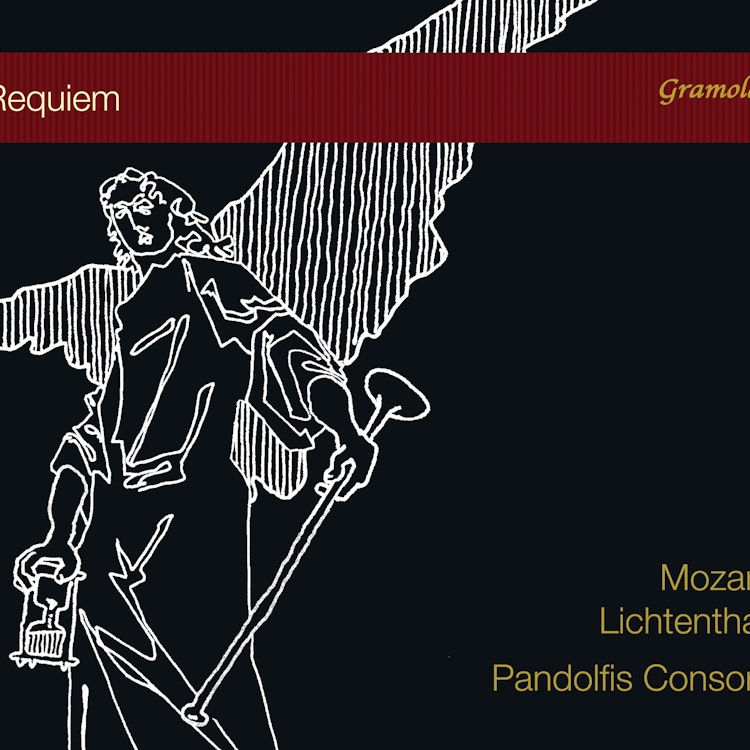
Mozart: Requiem in D Minor, K. 626 (Arr. P. Lichtenthal for String Quartet)
3/15/2019, 12 Tracks, 43:36
Featuring
Maximilian Bratt
Ingrid Rohrmoser
Elżbieta Sajka-Bachler
Günter Schagerl
Pandolfis Consort Wien
Wolfgang Amadeus Mozart
Did you know?
1/7
Composer Biography
Peter Lichtenthal, the arranger of this Requiem version, was a versatile author who studied both music and medicine, writing books on topics from dietetics to astronomy.
Composer Biography
Mozart had wanted to compose a Requiem for a long time, having written to his father in 1787 that death was the 'true ultimate aim of our life' and a comforting friend.
Performer Biography
Elżbieta Sajka-Bachler, the violist and founder of Pandolfis Consort, also studied viola d'amore and is the head of the International Heinrich Ignaz Biber Festival in Vienna.
Composition History
Mozart left his Requiem unfinished at his death, with only the Introitus fully composed, and other movements completed only in vocal parts or sketches.
Composition History
Mozart's widow, Constanze, commissioned his students, including Franz Xaver Süßmayr, to complete the Requiem to secure payment and avoid repaying an advance.
Compositional Technique
Peter Lichtenthal, a contemporary of Mozart, created a string quartet version of the Requiem to promote Mozart's music in Italy, where large ensembles were less common.
Composition History
Mozart's Requiem was a commission from the wealthy Count Franz von Walsegg, who intended to pass it off as his own composition to honor his deceased wife.