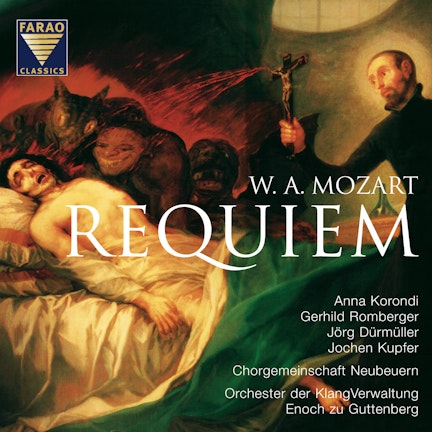
Mozart's Requiem was commissioned by a count who sought a ghostwriter to compose a requiem for his deceased wife, intending to pass it off as his own work.
Cultural Impact
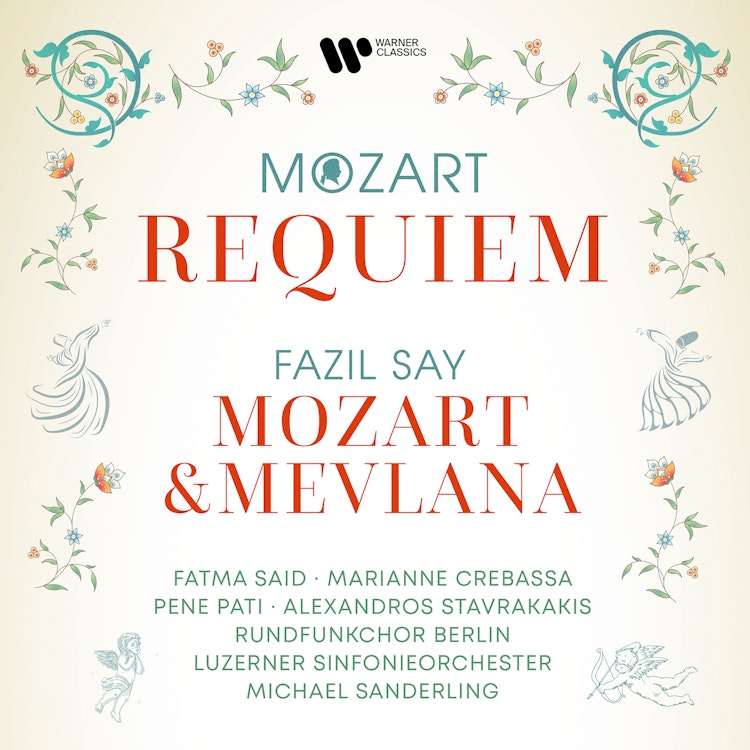
Fazıl Say's Moza/r_t.liga ve Mevlana aims to reconcile East and West by combining themes from Mozart with old Turkish Sufi philosophy, reflecting a bridge of love and friendship between cultures.
Composition History
Mozart only fully orchestrated the 'Introit' and 'Kyrie' movements of his Requiem; other sections exist only as vocal parts, bass lines, or break off mid-movement.
Composition History
Mozart's wife, Constanze, took the Requiem score away from him because she felt it was affecting his health, as he voiced premonitions of death.
Composer's Artistic Vision
Fazıl Say's work, Moza/r_t.liga ve Mevlana, focuses on Islamic mysticism, setting texts by the 13th-century Persian-Turkish scholar and poet Rumi (Mevlânâ), an important exponent of Sufism.
Composition History
The completion of Mozart's Requiem by his pupil Franz Xaver Süssmayr was initially presented as solely Mozart's composition, leading to later accusations of art forgery.
Composer's Artistic Vision
Fazıl Say, a Turkish pianist and composer, combines new music, jazz, and traditional Turkish music into a personal world-music idiom, often using thematic metamorphoses.
You might also enjoy...
Brahms: Ein deutches Requiem
Brahms: A German Requiem, Op. 45
Fire-Flowers
Mozart: Requiem d-moll, KV 626
Spring
Mozart: Requiem in D Minor
brea(d)th
William Averitt: Easter, 1906
Ljóssins knörr
Rafael Karlen: Sinking Cities
Helbig: Meer von Tränen
Mozart: Requiem, K. 626 (Süssmayr - Dutron 2016 Completion)