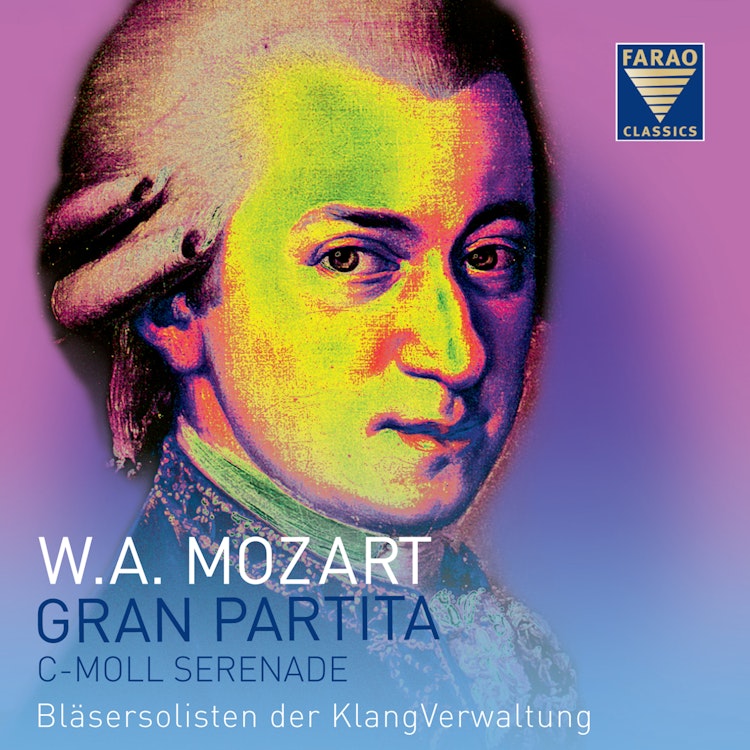
Mozart: Serenade Nr. 10 B-Dur, KV 361 "Gran Partita" and Serenade Nr. 12, KV 388 "Nacht Musique"
2/1/2012, 11 Tracks, 1:08:35
Featuring
Bläsersolisten der KlangVerwaltung
Wolfgang Amadeus Mozart
Did you know?
1/7
Interpretation
The Principal Wind Players of the KlangVerwaltung developed their interpretation concept for the 'Gran Partita' during three days of intense discussion and score study at Guttenberg Castle in May 2006.
Critical Reception
Mozart's C Minor Serenade KV 388 has historically puzzled biographers, with Alfred Einstein noting its 'sombre outbursts' and Wolfgang Hildesheimer describing it as 'ensouled by a strange darkness'.
Compositional Technique
The 'Gran Partita' KV 361 is unusually extensive for a serenade, featuring seven movements and a playing time of almost 50 minutes, with an almost orchestral instrumentation.
Composition History
Mozart's Serenades KV 388 and KV 361 stand out from his other serenades because they were composed in Vienna, not Salzburg, and were scored for unusually large wind ensembles.
Compositional Technique
The Serenade KV 388 in C Minor, with its strict four-movement form, resembles a symphony for winds more than a typical serenade, and stylistically foreshadows Mozart's C Minor piano concerto.
Composition History
The 'Gran Partita' KV 361 was likely premiered by Anton Stadler, a leading clarinet virtuoso who introduced the basset horn to Vienna, at a concert in March 1784.
Composition History
Mozart's Serenade KV 388, the 'Nacht Musique' in C Minor, was a rushed commission, possibly for Prince Liechtenstein, and its serious character was unusual for a serenade.
You might also enjoy...
Mozart: Serenade for 13 Wind Instruments, K. 361 "Gran Partita"
Mozart: Wind Serenade, KV. 361 "Gran Partita"
Mozart: Serenades Nos. 10 & 12
Danzi: Music for Clarinet & Orchestra
Mozart: The Serenades for 8 Wind Instruments, K. 375 & 388