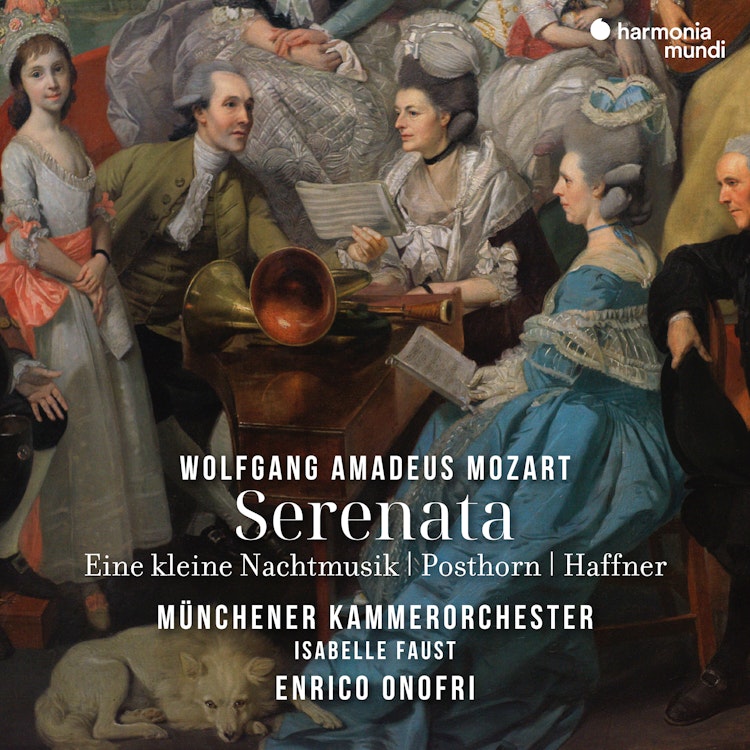
Mozart: Serenata (Eine kleine Nachtmusik - Posthorn - Haffner)
1/31/2025, 22 Tracks, 2:21:10
Featuring
Enrico Onofri
Isabelle Faust
Münchener Kammerorchester
Wolfgang Amadeus Mozart
Did you know?
1/7
Compositional Technique
Due to the need for orchestras to play standing or walking during serenades, cellos were absent, and double basses were replaced by instruments held in a sling, often backed up by bassoons or horns.
Composer's Artistic Vision
Mozart's serenades, though occasional and festive, show increasingly elaborate writing, blurring the lines between outdoor music, concert music, and symphonies.
Interpretation
This recording combines modern string and woodwind instruments with historical brass and timpani, and uses gut strings for double basses, to achieve a 'historically inspired performance'.
Performer Biography
Enrico Onofri, the conductor and violinist on this album, grew up in his parents' antiquarian atelier, fostering a deep passion for historical performances and exploring repertoire from the 17th to 20th centuries.
Composition History
In Salzburg, serenades were often commissioned as 'Finalmusik' by university students at the end of the academic year, performed in procession to the archbishop's residence and then again for professors and students.
Compositional Technique
Mozart's Salzburg serenades typically have a multi-movement structure (6-9 movements), including a sonata-form opening, at least two minuets, a lively finale, and often an 'interpolated concerto' with a solo instrument, frequently the violin.
Historical Context
In 18th-century Austria, serenades were public musical events, often involving full orchestras, that drew crowds to windows and streets, sometimes late into the night.