Mozart was famously dismissed from Archbishop Colloredo's service with a 'kick in the pants' by Count Arco, the Archbishop's chief steward, an event that marked his entry into free artistic profession.
Historical Context
Mozart's decision to become a freelance composer symbolized the rebellion of the new bourgeois world against the old regime of artistic production, amidst the violent reforms of the French Revolution.
Instruments
The oboe used in this recording is a Rigoutat, model Expression, and the piano is a Steinway D.
Composer's Artistic Vision
The oboe became one of Mozart's favorite timbres due to his familiarity and friendship with the excellent musicians of the famous Mannheim orchestra.
Composer Biography
The creation of these sonatas occurred during a crucial period in Mozart's life (1779-1781) when he resigned from service to Archbishop Hyeronimus von Colloredo to become an independent composer.
Interpretation
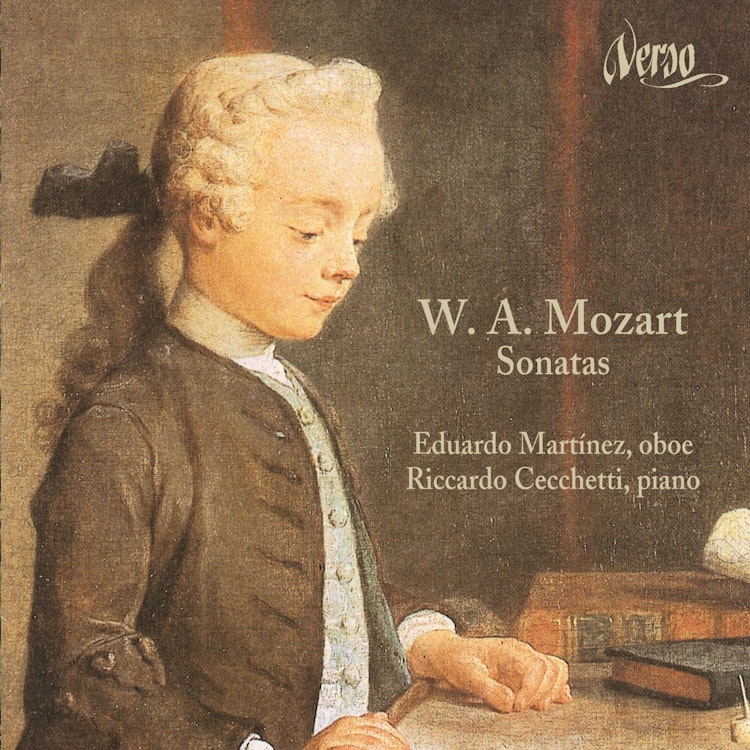
This recording adapts Mozart's sonatas, originally for piano and violin, for oboe and piano, reviving the 19th-century practice of performing works on different instruments.
Composer Biography
Mozart's opera Idomeneo, commissioned for the Munich theatre, gave him the confidence to confront Cardinal Colloredo, leading to his eventual departure from the Archbishop's service.
You might also enjoy...
Gassmann: Oboe Quartets & Quintets
Haydn : Divertimentos for Wind Instruments
Haydn Edition Volume 7 - Divertimentos for wind instruments
Mozart: Sonatas for flute and harp
Mozart, Suessmayr & Müller: Mozart etcetera
Trios for Clarinet, Viola and Piano
Olga Erdeli. Dittersdorf, Mozart, Roussel, Damase, Grandjany