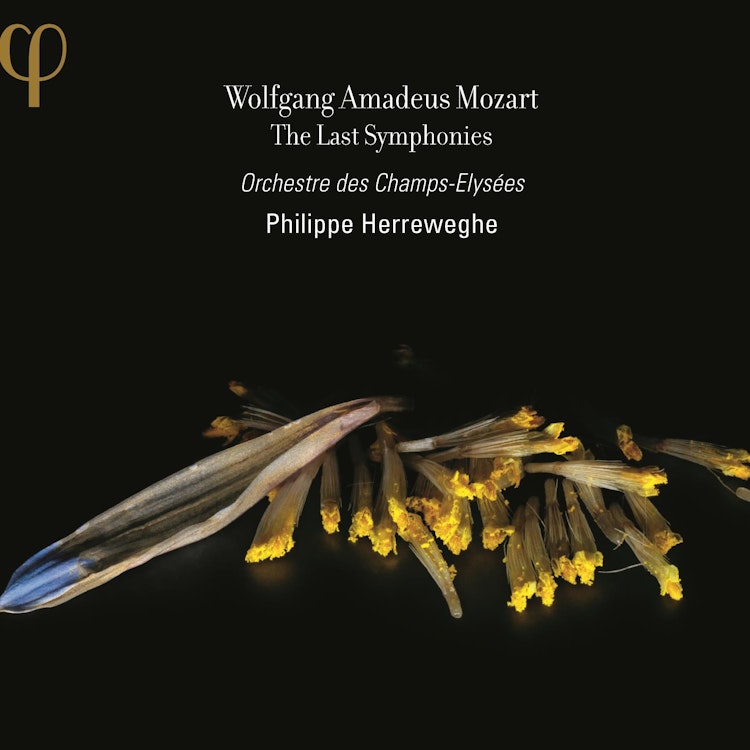
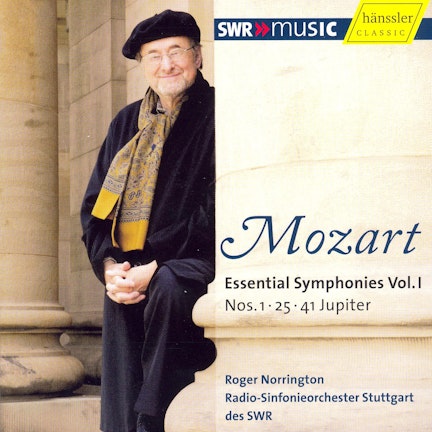
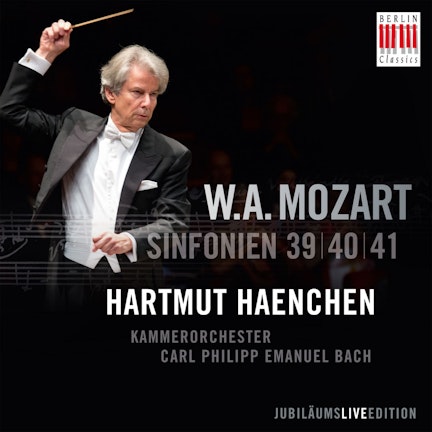
Mozart's last three symphonies, featured on this recording, were completed in the summer of 1788 and were likely intended for subscription concerts and private sales, though they were not printed during his lifetime.
Composer Biography
After moving to Vienna at age 24, Mozart composed only six symphonies in the decade before his death, a significant decrease from his earlier output.
Compositional Technique
The finale of Mozart's Symphony No. 41, 'Jupiter', is not a fugue but a sonata-form movement based on five tunes designed to be played simultaneously in various combinations, including a Gregorian chant motive.
Historical Context
Mozart's reduced symphonic output in Vienna was partly due to his need to support his family as a freelance musician, a challenging role at a time when most musicians relied on the Church, municipalities, or noble courts for financial stability.
Interpretation
This recording by Philippe Herreweghe and the Orchestre des Champs-Elysées aims to recreate the intimacy, nuance, and transparency of Mozart's orchestral music, which would have sounded different in his smaller performance spaces.
Compositional Technique
Mozart's Symphony No. 39 in E-flat major is unique among his symphonies for its slow introduction and for being the only one he wrote without oboes, allowing clarinets to color the orchestral sound.
Notable Performances
Contrary to popular belief, Mozart's final symphonies were performed during his lifetime, with documented performances including one of the G minor symphony in 1789 in the Prunksaal of the Imperial Library.