The Salzburg Kapelle, where Mozart worked, typically had up to twenty-six players, with violinists making up about half the orchestra.
Performer Biography
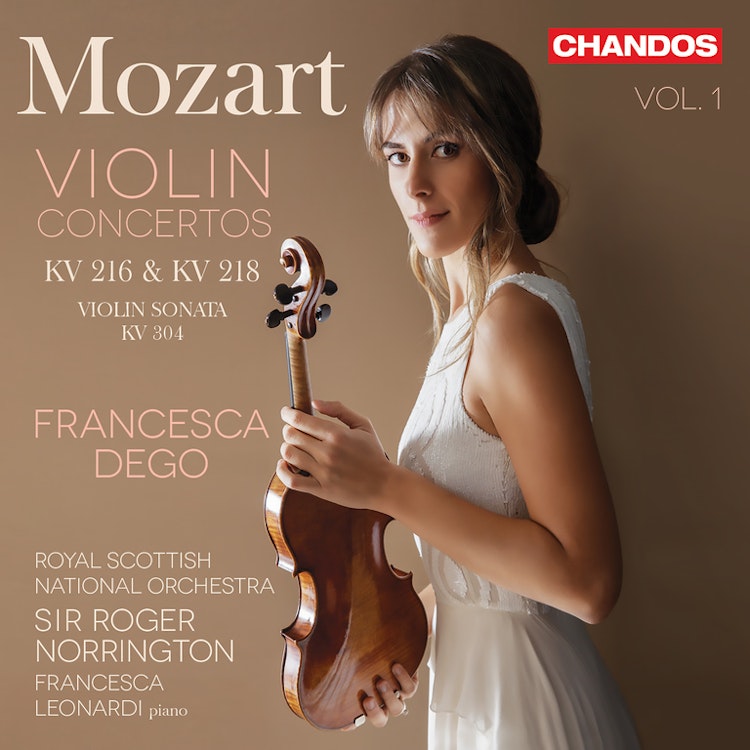
Francesca Dego, the violinist on this album, was the first Italian female prize-winner in nearly fifty years at the renowned Premio Paganini in Genoa.
Composer Biography
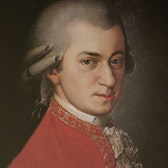
Wolfgang Amadeus Mozart, though famous as a pianist, was also an excellent violinist and performed frequently as a violin soloist in his early years.
Interpretation
According to Leopold Mozart's 1756 violin treatise, vibrato in 1775 was an occasional decoration for soloists, not used by good orchestras, as constant use would sound "as if one had a fever."
Compositional Technique
Mozart's violin concertos, like those of his contemporaries, follow the standard three-movement form inherited from Italian baroque composers such as Vivaldi.
Critical Reception
Unlike his piano concertos, Mozart's five violin concertos were rarely performed for seventy years after his death, only gaining interest after late 19th-century editions by violinists like Joseph Joachim.
Composition History
Mozart wrote his last four violin concertos between June and December 1775, before his twentieth birthday.
You might also enjoy...
Mozart: Violin Concerto No.7 K271A & No.4 K218
Mozart: Violin Concertos & Sonata
Mozart: Violin Concertos
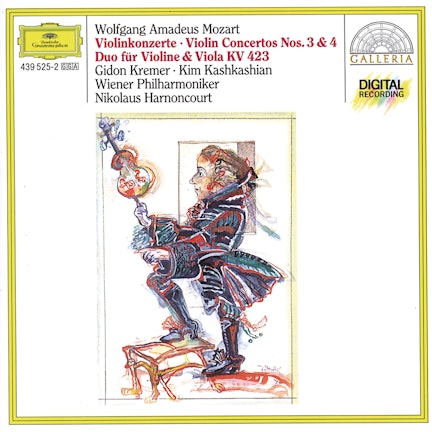
Mozart: Violin Concertos Nos. 3 & 4; Duo for Violin and Viola KV 423
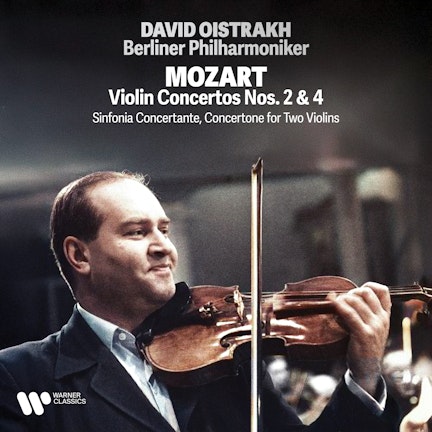
Mozart: Violin Concertos Nos. 2 & 4, Sinfonia concertante & Concertone for Two Violins (Remastered)