For the Mozart family, "precision" and "expression" were the two essential criteria for artful music-making, with precision in the beat being paramount.
Instruments
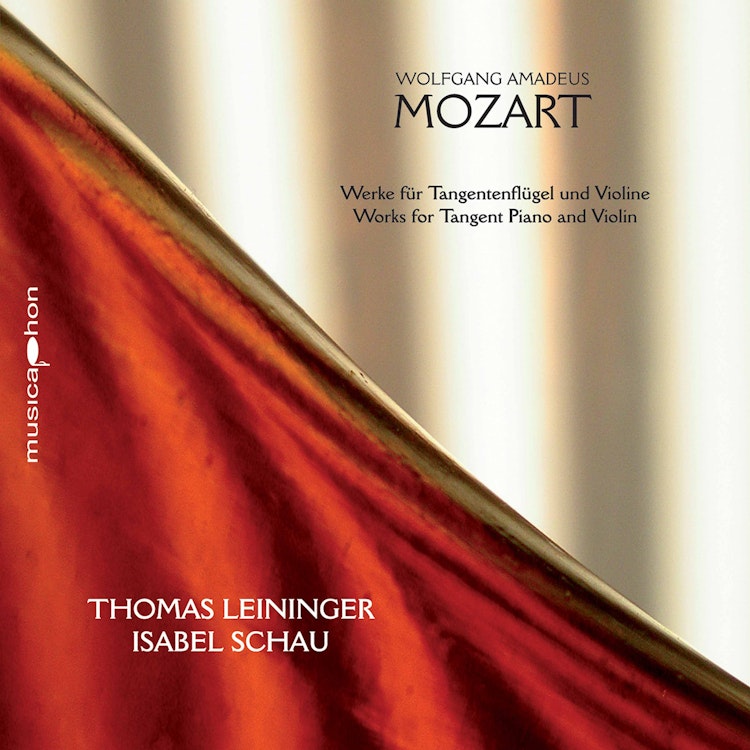
The Tangentenflügel, the keyboard instrument featured on this recording, is described as the "missing link" between the harpsichord and the fortepiano.
Instruments
The unique Tangentenflügel used on this recording was built around 1786 in Vienna, in the workshop of Anton Walter, and was designated as "Mozart's grand piano" in an 1804 handbook.
Interpretation
The performers emphasize the 18th-century principle of "speech in sound," where each musical figure is a gesture and each section a statement.
Composer Biography
Leopold Mozart, Wolfgang Amadeus Mozart's father, considered his son among Europe's best violinists, though Mozart himself preferred to be seen as a clavier virtuoso and composer.
Composition History
Mozart's early sonatas, written at age eight, were intended for performance with his sister on harpsichord and himself on violin, or with his father on violin and himself on harpsichord.
Instruments
The recording uses two high-arched violins, including a copy after Jacobus Stainer for the Baroque aesthetic and a Lorenzo & Tomaso Carcassi violin for later classical works.
You might also enjoy...
Isaac Stern: In Tribute and Celebration
Mozart: Symphonies, Concertos & Sonatas
Mozart: Duo Sonatas, Vol. 1
Mozartiana
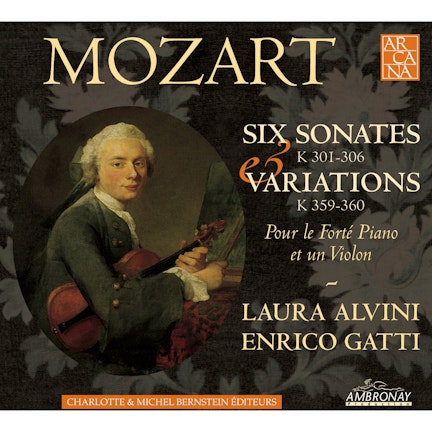
Mozart: Six sonates (K. 301-306) et variations (K. 359-360) pour le forté piano et un violon
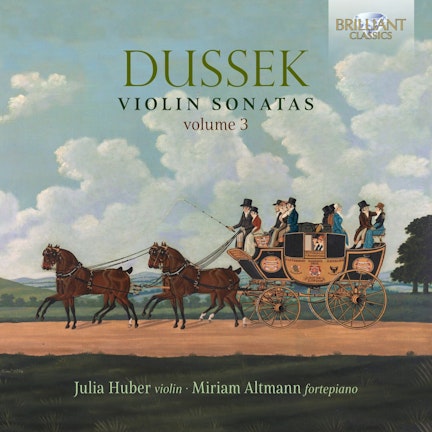
Dussek: Violin Sonatas, Vol. 3
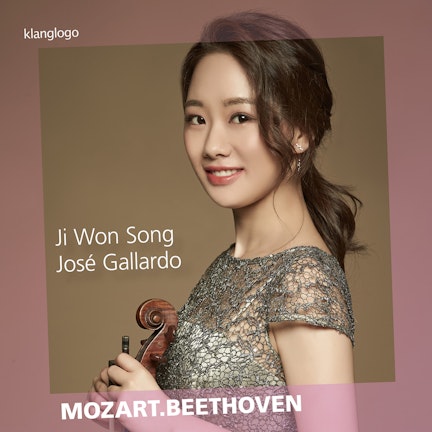
Mozart & Beethoven: Works for Violin
Joseph Haydn: Intégrale des Sonates pour Piano et violon